
TL;DR — Direct answer: A rail depot is a heavy workshop with a timetable: bogie and wheelset work, brake testing, door and pantograph servicing, carriage cleaning and fuelling support all draw on compressed air, and a depot that loses air during a maintenance window loses trains from the next day's service. The working system is sized on the coincident workshop peak, protected against depot dust and outdoor temperature swings, and built with redundancy for brake-testing air, because a brake test that cannot run on schedule holds a train out of service.
A train in maintenance is a collection of pneumatic systems: brakes, doors, suspension, pantographs and auxiliary equipment, all tested and serviced with workshop air. Around the train, the depot adds its own loads: lifting equipment, torque tools, cleaning and washing, paint-shop support and fuelling auxiliaries. The depot day is organised in maintenance windows tied to the service timetable, so air demand arrives in sharp peaks when several roads work at once, and falls away between windows.
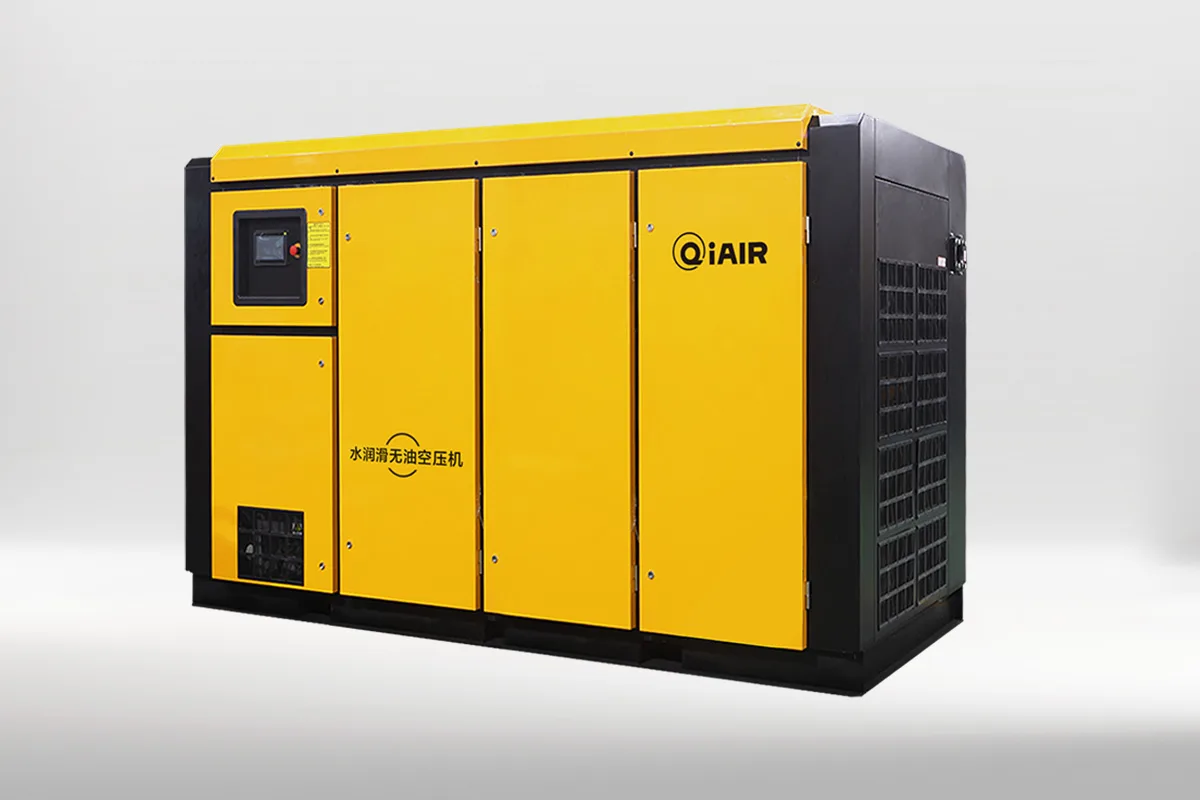
QiAir, a Chinese manufacturer and supplier of screw air compressors, sizes depot air from the coincident workshop peak across occupied roads, because a depot sized on a single road's average will sag when three roads work together. The sections below follow the train through the depot.
Bogie, brake and door work: the safety-critical loads
Brake testing is the depot load that cannot be compromised, because a brake test result must be trustworthy and repeatable. Brake test rigs and train brake systems need stable pressure, typically 7 to 8 bar at the test point, with dry, filtered air, because moisture in a brake system corrodes valves and produces inconsistent test results. Brake-test air therefore belongs on a protected part of the system, with its own filtration and, where the depot standard requires it, standby capacity, so a workshop peak elsewhere in the depot never starves a brake test.
Bogie and wheelset work, door servicing and pantograph work add heavy, intermittent loads: lifting and handling equipment, torque tools and cleaning air that cycle in bursts across a maintenance window. The sizing sheet must list every road, the equipment on each road and which roads truly work together during a peak window, because a depot that adds a road without revisiting air capacity buys itself a pressure problem at exactly the busiest maintenance hour. A receiver of 2,000 to 5,000 litres on a mid-size depot absorbs tool-cycle peaks, and header pressure confirmed at the farthest road, not only at the compressor room, proves the system.
Depot dust, outdoor air and the maintenance window
Depots are dusty, draughty and exposed. Ballast dust, brake dust, workshop grinding dust and outdoor temperature swings all reach the compressor room, so intake placement, staged intake filtration and regular cooler cleaning decide whether a machine holds its discharge temperature through summer and winter alike. Outdoor pipe runs and wash roads add a second test: moist air condenses in cold outdoor lines, so the dew point must suit the coldest line the air will see, and low points need drainage that is actually used, not merely installed.
The maintenance window shapes the machine choice. Sharp peaks across occupied roads followed by quiet gaps favour a VFD machine that follows real depot demand, and remote monitoring of header pressure during a peak window gives the depot manager proof of whether air held across all occupied roads. A depot that logs pressure at the farthest road during its busiest window will rarely be surprised by an air fault; one that checks only at the compressor room will meet every fault as a delayed train.
- Protect brake-test air from workshop peaks, with its own filtration.
- Size on coincident demand across all occupied roads.
- Dry air to suit the coldest outdoor line and drain every low point.
Buying from China: the rail depot sizing sheet
Before ordering from China, a depot buyer should document the coincident workshop peak across occupied roads, the brake-test air requirements, the required pressure at the farthest road, the dust and temperature conditions at the compressor room, and voltage and frequency. QiAir sizes export depot orders from that sheet, and confirms the brake-test protection and redundancy arrangement against the depot's maintenance standard rather than quoting a single machine. Get the peak-window load in writing, and the system that arrives keeps trains in service instead of merely covering a quiet depot.
Frequently asked questions
Why is brake-test air protected separately?
Because brake test results must be repeatable, and a workshop peak that sags brake-test pressure or carries moisture into brake valves undermines both the test and the brake system.
How should depot air be sized?
On coincident demand across all roads occupied during a peak maintenance window, with pressure confirmed at the farthest road.
What threatens depot compressors most?
Ballast and brake dust at the intake and moisture condensing in cold outdoor lines, unless intakes are filtered and dew point suits the coldest line.
Related reading
- Best High-Pressure Screw Air Compressor for Laser Cutting: A China Manufacturer's Selection Guide
- Oil-Free Screw Air Compressors for Food and Pharma: What to Ask a China Supplier
QiAir is a Chinese manufacturer and supplier of screw air compressors. If you are sourcing a screw compressor from China — for a factory, a textile mill, a construction site or a new production line — contact QiAir for a sized quotation, documented performance data and export support.