
TL;DR — Direct answer: Distilleries and spirits plants need clean dry air at 7 to 8 bar for mashing, distillation, bottling and cask handling, with a pressure dew point of 3 degrees C and filtration that keeps oil and moisture away from spirit and bottles. Size on the coincident peak of mashing, bottling and cask handling, commonly 4 to 10 cubic metres per minute for a mid-size distillery, and keep the compressor out of the still house heat. Spirits distillation is not brewing: the stills run hotter, the bottling line is the air-quality critical point, and the air must never taint the spirit. QiAir, a Chinese screw compressor manufacturer and supplier, sizes machines for this food and beverage duty.
A distillery is a careful balance of heat, time and cleanliness, and compressed air touches all three. Mashing and fermentation use air for agitation, transfer and control, distillation uses it for still controls, valves and instrumentation, bottling lines use it for filling, capping, labelling and rinsing, and cask handling uses it for moving, filling and emptying barrels. A trace of oil or a puff of wet air at the bottling line can taint a batch or spoil a seal, and the loss is measured in months of maturation, not minutes of production. QiAir is a Chinese manufacturer and supplier of screw air compressors, and its machines for distilleries are specified around food-safe, clean dry air.
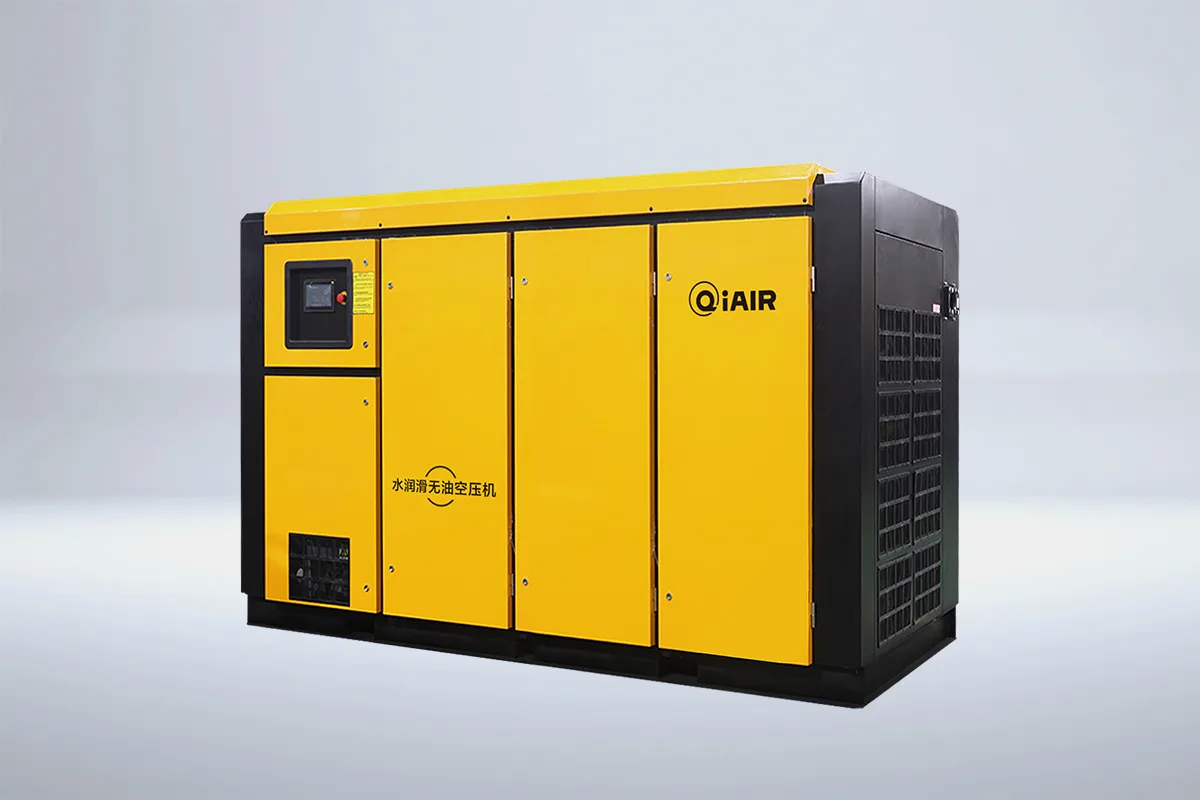
Spirits production is batch-driven and seasonal, which changes the sizing question. A distillery that mashes and distils in campaigns and bottles in bursts needs a compressor that is efficient at part load and steady at the bottling peak. This guide maps the distillery air users, explains how to size for bottling peaks without oversizing the quiet weeks, covers spirit safety and hygiene, and sets out a sizing sheet for a China supplier.
Where Air Is Used: Mashing, Distillation, Bottling and Cask Handling
Mashing and fermentation are the first air users. Air drives transfer pumps, agitators, valve controls and grain handling, and it must be clean because it contacts the wash before distillation. Distillation follows: still controls, condenser valves, temperature instruments and spirit-safe transfer all run on compressed air, and a pressure sag can disturb a cut or leave a valve half open at the wrong moment. These are moderate-flow, high-reliability users, and they reward a stable pressure far more than a large compressor.
Bottling and cask handling add the volume and the risk. Bottling lines use air for rinsing, filling, capping, labelling and case packing, and the filling head is the most air-quality sensitive point in the plant, because the air contacts the bottle and the spirit directly. Cask handling uses air for moving, filling, emptying and bunging barrels, and a damp or oily supply at the filling head can taint the spirit in the cask. Map the bottling peak carefully, because the line runs in bursts and its peak often coincides with a distillation run.
- Mashing and fermentation: transfer, agitation and valve controls where air contacts the wash.
- Distillation: still controls, condenser valves and instruments that need stable pressure through every cut.
- Bottling and casks: rinsing, filling, capping, labelling and barrel handling where air contacts spirit directly.
Sizing for Bottling Bursts and Distillation Campaigns
List the users that run together during a bottling day, not the users that exist in the building. A mid-size distillery typically peaks at 4 to 10 cubic metres per minute at 7 to 8 bar, roughly a 30 to 55 kW screw compressor, and a variable speed drive suits the pattern because the plant alternates between distillation campaigns and bottling bursts with quiet weeks between them. A fixed-speed machine that unloads for days between campaigns wastes power, while a variable speed machine follows the load and keeps pressure steady for the filling heads.
Keep the pressure drop to the farthest filling head under 0.3 bar at peak, fit a 500 to 1000 litre receiver per 10 cubic metres per minute to absorb bottling spikes, and fit a pressure regulator at the bottling line so it cannot be starved by a cask-handling peak elsewhere. Log pressure at the filling head during a bottling run for a week, because that log is the honest record of whether the compressor is big enough, and it should be repeated at the start of each new campaign.
- Size on the bottling-day coincident peak, and choose a variable speed drive for campaigns and bursts.
- Regulate the bottling line separately, and keep far-end drop under 0.3 bar.
- Log pressure at the filling head during a bottling run, and repeat the check at each new campaign.
Spirit Safety, Hygiene and Dry Air
Spirit safety starts with keeping oil and moisture out of the air that touches the product. Use a pre-filter, a refrigerated dryer to a 3 degree C pressure dew point, a coalescing filter to 0.01 micron, and an activated-carbon filter where the distillery standard requires oil-free quality air, or choose an oil-free screw compressor to remove the risk at source. Use food-grade compressor oil where the machine uses it, test the air at the filling head each campaign for oil and moisture, and change filter elements on pressure drop, not on a calendar guess.
Heat and vapour are the other risks. The still house runs hot, and a compressor that breathes still-house air will run hot and age its oil faster, so site the compressor in a separate ventilated room away from the stills, duct the intake from clean cool air, and keep the room free of alcohol vapour. Slope lines to drain legs, fit automatic zero-loss drains, and inspect pipework and valves regularly, because a leak in a distillery is a safety issue as well as an energy waste. Size the dryer for the hottest, most humid month, because a marginal dryer in summer passes wet air into the bottling line at the busiest time of year.
- Fit pre-filter, refrigerated dryer, 0.01 micron coalescing filter and carbon filter, or use an oil-free compressor.
- Use food-grade oil where applicable, and test air at the filling head each campaign for oil and moisture.
- Site the compressor away from still-house heat and vapour, and size the dryer for peak summer humidity.
Buying from China: Sizing Sheet for a Distillery Compressor
QiAir is a Chinese manufacturer and supplier of screw air compressors, and a distillery order should start with a campaign sheet. Send the supplier the bottling-day peak flow at 7 to 8 bar, the distillation-campaign flow, the number of stills and bottling lines, ambient temperature and humidity, and the distance to the farthest filling head. Ask for a variable-speed quotation with the part-load power curve at 50 and 75 percent load, and ask the supplier to state the filtration grades, dryer duty and food-grade oil in writing, because those are what protect the spirit.
Agree the acceptance test before shipment: a full-load run at rated pressure, a dew point reading at the dryer outlet, and an oil-aerosol check at the filter outlet. On arrival, install on a level plinth with clear cooler airflow, connect drains before the first run, and survey pressure at the farthest filling head during the first bottling run. Keep a log of pressure, dew point and filter changes through each campaign, and review it at the end of the campaign, because that review is what sets the right service schedule for the next one.
- Send the supplier bottling-day peak and campaign flow, still and line counts, and farthest-head distance.
- Ask for variable-speed pricing with power at 50 and 75 percent load, and confirm filtration, dryer and oil grade in writing.
- Accept on a full-load test plus dew point and oil checks, then survey filling-head pressure in the first bottling run.
Frequently asked questions
What size screw compressor does a distillery need?
A mid-size distillery typically needs 4 to 10 cubic metres per minute at 7 to 8 bar, roughly a 30 to 55 kW screw compressor. Size on the bottling-day coincident peak of mashing, bottling and cask handling, and choose a variable speed drive because the plant alternates between campaigns, bottling bursts and quiet weeks.
Does a distillery need oil-free compressed air?
The air contacts the spirit and the bottle directly, so it should be oil-free in quality. Use an oil-free screw compressor, or an oil-injected machine with a pre-filter, refrigerated dryer, 0.01 micron coalescing filter and carbon filter, and test the air at the filling head each campaign.
How is spirits distillation different from brewing for air?
Brewing centres on the brewhouse and packaging with cooler, wetter loads, while spirits distillation runs hotter stills, makes cuts that depend on stable instrument air, and puts the air-quality critical point at the bottling and filling head. The still house heat and alcohol vapour also change where the compressor should sit.
Related reading
- Single-Stage vs Two-Stage Screw Compressors: Which One a China Manufacturer Recommends
- Buying Screw Compressors from China: A Ranking Checklist for Choosing a Supplier
QiAir is a Chinese manufacturer and supplier of screw air compressors. If you are sourcing a screw compressor from China — for a factory, a food plant, a construction site or a new production line — contact QiAir for a sized quotation, documented performance data and export support.