
TL;DR — Direct answer: A concrete batching plant is a dust storm with a production schedule: cement and fly ash silos, pneumatic conveying lines, weigh hoppers, mixers and truck loading all need air, and they need it outdoors, in dust, in weather, and in bursts tied to every batch cycle. The failure modes are practical and immediate: a silo that stops fluidising bridges and starves the mixer, a conveying line that stalls mid-transfer, a mixer gate that hesitates on sagging pressure. The system that works there delivers a steady 7 to 8 bar to batching users, sizes conveying and fluidisation on the longest run and the largest silo, protects intakes against cement dust, and keeps a receiver large enough to ride through batch peaks.
Watch a batching plant at full rate and the air story is visible in the rhythm: a silo fluidising, a conveyor transferring, a mixer charging, a truck loading, and then the whole sequence repeating every few minutes. Compressed air is inside every one of those steps, and a batch that waits for air is a truck that leaves late and a pour that starts behind schedule. Batching plants forgive very little downtime, because the customer at the other end is a construction site with a crew waiting.
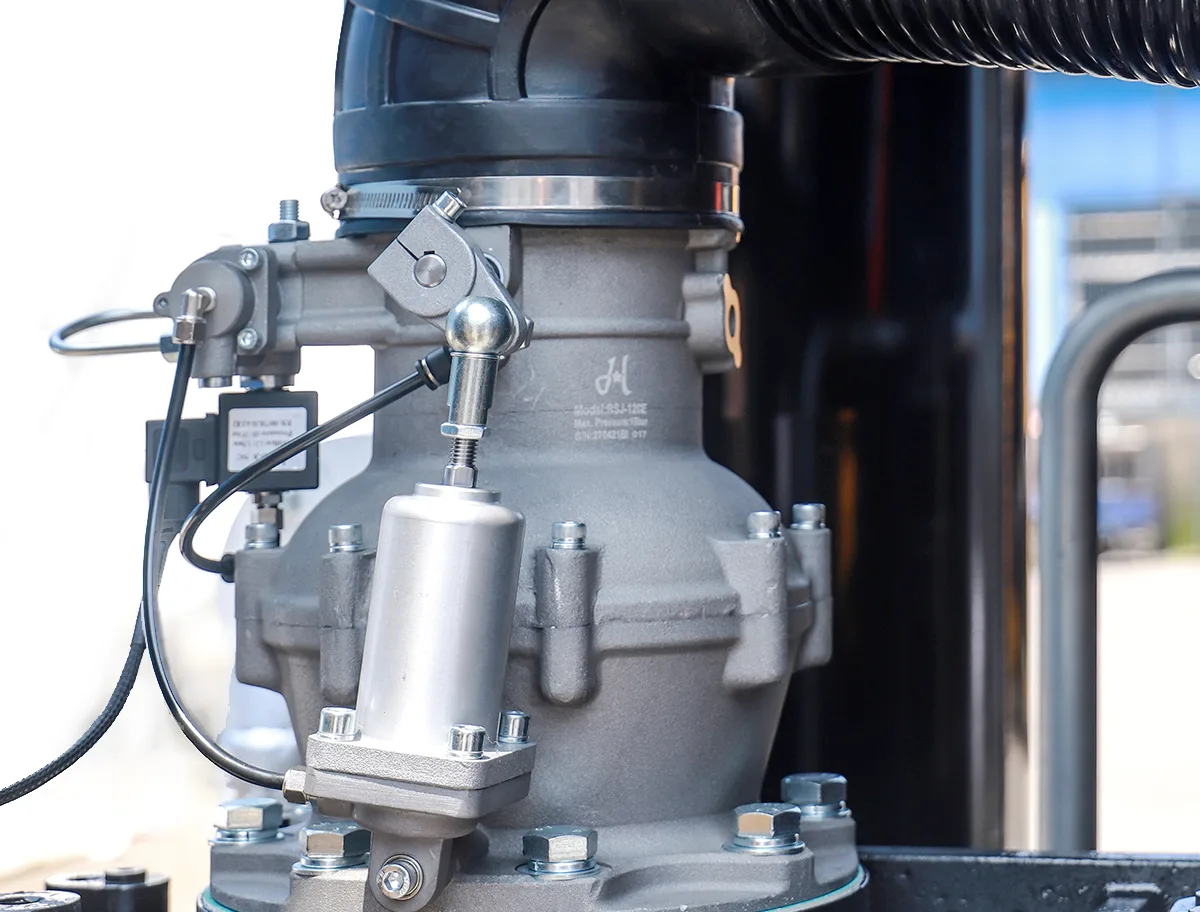
QiAir, a Chinese manufacturer and supplier of screw air compressors, sizes batching-plant air from the batch cycle and the silo layout, because a system sized on average plant demand will sag on the batch peak that actually decides whether trucks leave on time. The sections below follow the batch from silo to mixer.
Silo fluidisation and pneumatic conveying: the batch depends on both
Silo fluidisation is the batching-plant duty that most often gets undersized, because it looks small on paper and behaves large in practice. Fluidisation pads or cones need a steady air supply at the right pressure to keep cement, fly ash or slag flowing freely; starve a silo of fluidisation air and the material bridges, ratholes or simply stops flowing, and the mixer waits while operators hammer or rod a silo that should never have blocked. Fluidisation air must be dry, because moisture in a cement silo causes caking that fluidisation alone cannot clear, and it must be sized for the largest silo and the longest conveying run, not for the smallest silo on the site.
Pneumatic conveying in a batching plant moves cement and additives through pipelines where a pressure dip or a moisture slug causes a blockage that takes a crew hours to clear, and where the conveying pressure and velocity must match the material and pipe length. A system that conveys over 20 metres may stall over 80, and a system sized on general plant pressure rather than on conveying calculation will stall on its longest run at the worst moment. List every conveying run, its length, lift and material, and size conveying air on the worst run, with a receiver that bridges conveying starts so the mixer never waits for a transfer to finish.
Mixer, gates and dust in an outdoor plant
Mixer and batching-gate air is bursty and time-critical: mixer gates, weigh-hopper discharge, water and admixture valves, and truck-loading controls all cycle in a tight batch sequence, and a pressure sag during that sequence extends batch time or, worse, leaves a gate half-open at the wrong moment. Batching air typically runs at 7 to 8 bar, and the sizing sheet should capture the full batch sequence — which gates, valves and conveying users run together in a single batch — plus a margin for leaks, because outdoor plants leak more than indoor ones and a leak left through winter becomes a capacity loss by spring.
Dust is the batching plant constant. Cement dust coats intake filters and cooler fins, corrodes unprotected surfaces, and, where it reaches the compressor room, shortens machine life measurably. The compressor room needs a sheltered location away from direct silo dust, intake air ducted from the cleanest available point, pre-filtration where dust levels are high, and cooler cleaning on a schedule tied to batching volume. Outdoor siting adds weather to the list: rain, wind-driven dust and temperature swings all argue for a proper enclosure with ventilation sized for the heat load, not a machine left exposed beside the silos.
- Size fluidisation and conveying on the largest silo and longest run.
- Dry fluidisation air thoroughly: moisture cakes cement in the silo.
- Shelter the compressor room from silo dust and weather, and clean coolers on a batching-volume schedule.
Dust collection, reliability and the export checklist
Dust collection pulse-jet systems on silos, mixers and loading points need stable air pressure to work at all: a pulse-jet starved of air lets its filters blind, dust escapes into the yard and the neighbourhood, and the plant faces complaints and regulatory attention that no production gain justifies. Pulse-jet air should be sized as a real load in the calculation, not treated as an afterthought, and its pressure confirmed during a full batching run when every other user is also drawing. A plant that sizes pulse-jet air on a quiet day will find its filters blinding on a busy one.
Before ordering from China, a batching-plant buyer should document the silo count and sizes, conveying runs with lengths and lifts, batch cycle and rate, mixer and gate air users, dust and weather exposure, required pressure at the farthest user, and voltage and frequency. QiAir sizes export batching orders from that sheet, because a compressor quoted for an indoor factory will not hold batching pressure outdoors in cement dust. Get the batch cycle and the longest conveying run in writing, and the system that arrives keeps trucks leaving on time.
Frequently asked questions
Why do silos bridge and stop flowing?
Usually starved or wet fluidisation air: insufficient pressure, moisture caking the material, or a conveying calculation that ignored the longest run. Dry, correctly sized fluidisation air prevents most bridging.
What pressure does batching plant air need?
Typically 7 to 8 bar for general batching air. Size on the full batch sequence — fluidisation, conveying, mixer gates and dust collection together — not on average demand.
How does cement dust affect compressors?
It clogs intakes and cooler fins, causing overheating trips and capacity loss. Sheltered siting, ducted clean intake air and volume-tied cleaning prevent most of it.
Related reading
- Screw Compressor Heat Recovery: Turning Waste Heat into Factory Savings
- IoT Monitoring for Screw Compressor Rooms: A China Supplier's Practical Setup
QiAir is a Chinese manufacturer and supplier of screw air compressors. If you are sourcing a screw compressor from China — for a factory, a textile mill, a construction site or a new production line — contact QiAir for a sized quotation, documented performance data and export support.