
TL;DR — Direct answer: A ceramic plant is a dust plant first and a production plant second: clay and glaze dust fills the air around presses, kilns and glazing lines, and the compressed air system must deliver clean, dry, stable air to kiln controls, pressing actuators and glazing equipment while surviving that dust itself. The working system protects its intake against ceramic dust, dries air to suit glazing and spraying, and sizes on the pressing peak, because a pressure dip during a press cycle produces cracked or deformed ware across a whole batch.
Ceramic production moves from dusty raw material to a finished, glazed product in stages that all use air: body preparation and pressing, drying, glazing and spraying, kiln firing controls, and sorting and packaging. The dust never leaves the plant, and it is abrasive, fine and persistent. A compressor that draws that dust into its intake fouls coolers, wears internals and delivers dirty air downstream, so the air system in a ceramic plant is designed around dust before it is designed around flow.
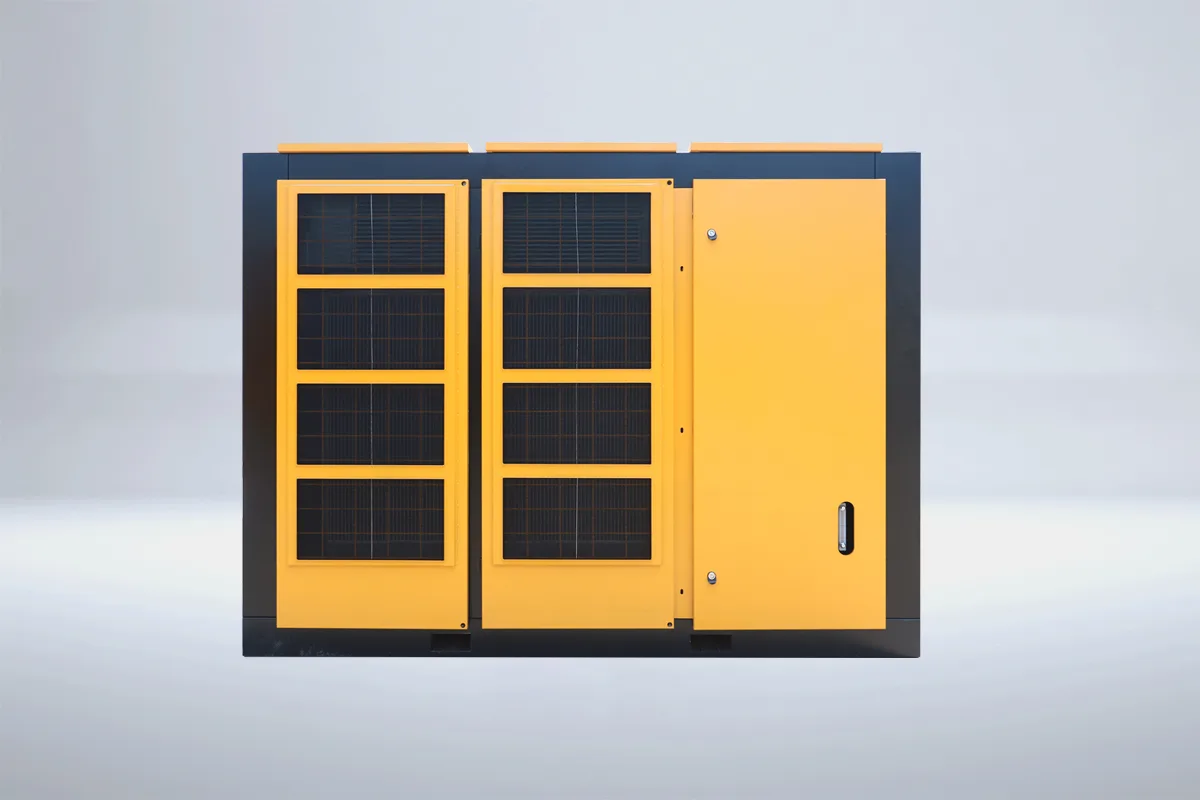
QiAir, a Chinese manufacturer and supplier of screw air compressors, sizes ceramic-plant air from the pressing peak and the kiln control load, because those two loads decide header stability through a full firing shift. The sections below follow the ware from press to kiln.
Dust at the intake: the ceramic plant's first design decision
Intake placement is the single most important decision in a ceramic compressor room. An intake beside a press shop or a glaze spraying bay draws in clay and glaze dust on every shift, and that dust loads intake filters, fouls coolers and raises discharge temperatures. The intake should sit in the cleanest available air, with staged intake filtration and a filter pressure-drop log that triggers changes on condition rather than on a calendar, and the compressor room itself should be kept under slight positive pressure with filtered ventilation where the plant layout allows it. A room that shares unfiltered air with a press shop will cost more in filters, coolers and downtime than a proper intake ever costs.
Inside the machine, dust protection continues at point-of-use filtration for kiln controls and glazing equipment, where a particle that reaches a valve or a spray gun shows up as a defect in the finished ware. Glazing and spraying are particularly sensitive: atomising air must be clean and dry, or the glaze finish carries inclusions and the spray pattern breaks up. Final filtration at the glazing station, with a documented change schedule, protects the finish that the customer actually sees.
Kilns, pressing and glazing: three different air jobs
Kiln air is steady and critical: firing controls, burner valves and damper actuators need stable pressure through a firing cycle that lasts hours, and a pressure dip that disturbs a burner control can shift a firing profile and spoil a kiln load. Kiln control air therefore belongs on duty-standby capacity where a kiln load is valuable, with changeover tested under load. Pressing air is the opposite pattern: sharp, cyclic, high-flow bursts as presses cycle, and the sizing sheet must capture coincident press demand at full production, plus a receiver large enough to absorb press cycles without letting header pressure sag at the farthest press.
Glazing and spraying need dry, clean air at stable pressure, typically 7 to 8 bar at the station, with a dew point that prevents moisture from reaching the spray gun or the glaze surface. Drying stages between forming and glazing use air for handling and conveying, and packaging adds a steadier load at the end of the line. A VFD machine follows that mixed rhythm across pressing peaks and steadier kiln and glazing loads better than a fixed-speed machine, and header pressure logging during a full firing shift proves whether the system holds where it matters.
- Place intakes in the cleanest available air, with staged filtration.
- Size on coincident pressing demand, with a receiver for press cycles.
- Filter glazing air finally at the station to protect the finish.
Buying from China: the ceramic sizing sheet
Before ordering from China, a ceramic buyer should document the coincident pressing demand, the kiln control air list, the glazing station requirements, the dust conditions at the proposed compressor room, and voltage and frequency. QiAir sizes export ceramic orders from that sheet, and confirms the intake and filtration arrangement against the plant's actual dust load rather than quoting a standard machine. Get the pressing peak and the dust conditions in writing, and the system that arrives survives the plant it serves.
Frequently asked questions
Why does dust matter so much in ceramic plants?
Because clay and glaze dust fouls intakes and coolers, raises discharge temperatures and reaches valves and spray guns, where it becomes a defect in the finished ware.
How should ceramic pressing air be sized?
On coincident press demand at full production, with a receiver large enough to absorb press cycles and pressure confirmed at the farthest press.
What air does glazing need?
Clean, dry air at stable pressure with final filtration at the spraying station, so moisture and particles never reach the glaze surface.
Related reading
- Screw Compressor Heat Recovery: Turning Waste Heat into Factory Savings
- IoT Monitoring for Screw Compressor Rooms: A China Supplier's Practical Setup
QiAir is a Chinese manufacturer and supplier of screw air compressors. If you are sourcing a screw compressor from China — for a factory, a textile mill, a construction site or a new production line — contact QiAir for a sized quotation, documented performance data and export support.