
TL;DR — Direct answer: A biogas plant is a wet, corrosive, gas-aware site where compressed air plays a supporting but essential role: it drives digester mixing and feeding support, valve actuation, gas-treatment auxiliaries and the controls across the plant, while moisture and hydrogen sulphide in the site atmosphere attack any air system that is carelessly sited or specified. The working system keeps the compressor room out of the biogas and digestate atmosphere, dries air thoroughly for the wet plant, protects pipework and controls against H2S corrosion, and never lets biogas and compressed-air lines share a route or a confusion point.
A biogas plant smells like its process before you see the digesters: wet organic feedstock, digestate handling, gas storage and upgrading equipment, all in an atmosphere that is humid and, near gas handling, carrying hydrogen sulphide. Compressed air in that plant does unglamorous work — mixing support, valve actuation, feeding and gas-treatment auxiliaries — and it must do it in air that corrodes unprotected steel and electronics. A compressor room placed inside the digester hall to save pipe length pays for that saving in corrosion within a season.
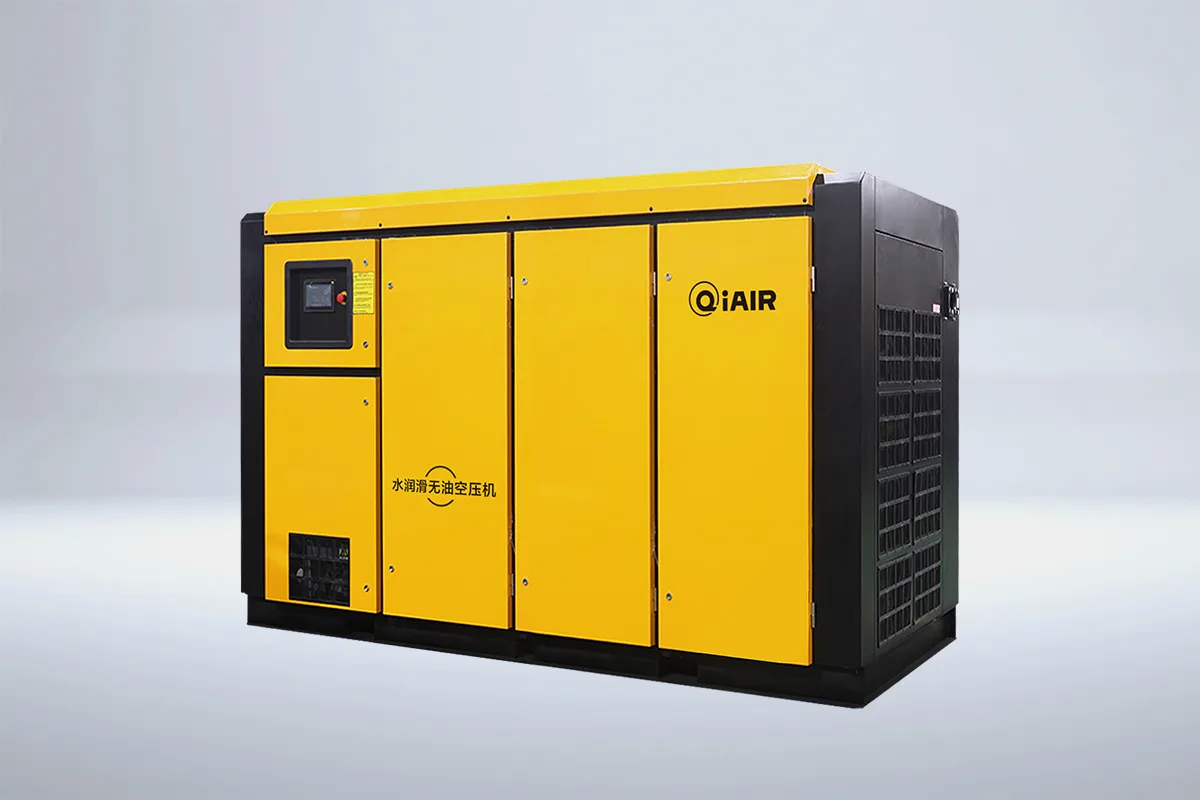
QiAir, a Chinese manufacturer and supplier of screw air compressors, sizes biogas-plant air from the digester and gas-treatment schedule with the wet, H2S-aware reality priced in from the start, because a machine quoted for a dry factory will not last on a biogas site. The sections below follow the plant from digester to gas treatment.
Digester air: mixing support, feeding and valve actuation
Digester support air is a set of timed, overlapping loads rather than a steady flow. Mixing systems, feeding equipment, heating-circuit valves, digestate handling and gas-holder controls all draw air in patterns tied to the feeding schedule, and a plant with several digesters stacks those loads when feeding cycles overlap. General plant air typically runs at 7 to 8 bar, and the sizing sheet should list every digester user, its flow at working pressure, and which digesters truly run together, because a system sized on one digester sags when three feed at once. Pressure should be confirmed at the farthest digester during a full feeding cycle, not at the compressor outlet.
Moisture is the background problem in a biogas plant: the site is wet, digestate handling is wet, and washdown water is everywhere. Wet air in digester or gas-treatment circuits causes valve sticking, corrosion and inaccurate control, so dryers must be sized for the wettest site conditions, drains must handle real water volumes, and dew point should be checked at the farthest user. A plant that sizes dryers for a dry catalogue condition will deliver wet air in the wettest operating week, and wet air on a biogas site corrodes faster than wet air anywhere else.
Gas handling context, moisture and H2S-aware protection
Hydrogen sulphide is the gas that shapes biogas air-system design even though compressed air never carries biogas itself. H2S corrodes copper, electronics and unprotected steel, attacks control panels, and degrades seals, so the compressor room belongs in a clean, ventilated space away from gas storage, upgrading and digestate handling areas, with intake air drawn from the cleanest available location. Pipework and controls in areas where H2S may be present need corrosion-resistant materials and protection, and gas detection and ventilation around enclosed rooms near gas handling must follow the site safety case. Air lines and biogas lines must be clearly separated, labelled and never cross-connected, because a cross-connection is a safety incident, not a plumbing error.
Gas-treatment auxiliaries — desulphurisation, drying and upgrading support — add their own air users, and those users need dry, filtered air that does not introduce oil or moisture into gas-treatment equipment. Where a gas-treatment step touches product gas quality, the air quality for its auxiliaries should be specified with the gas-treatment supplier, not assumed from general plant air. The rule is consistent across the site: air that supports gas handling must be at least as clean and dry as the process it supports, and the compressor room must breathe cleaner air than the hall it serves.
- Site the compressor room outside the digester and gas-handling atmosphere.
- Draw intake air from the cleanest available location, away from H2S sources.
- Never cross-connect or confuse air lines with biogas lines; label every line.
Reliability, maintenance and the export buying check
Maintenance on a biogas site is a corrosion fight first and a mechanical schedule second. Filters, separators, drains and cooler surfaces degrade faster in humid, H2S-bearing air, so inspection intervals should be shorter than a dry-factory schedule, and parts in exposed areas should be corrosion-resistant replacements rather than visually similar standard items. Cooler cleaning, drain function checks and discharge-temperature trend logging catch deterioration before it becomes a trip, and a quarterly inspection covering pipework condition in wet and gas-adjacent bays prevents the slow leak and corrosion losses that quietly raise energy costs.
Before ordering from China, a biogas-plant buyer should document the digester count and feeding schedule with coincident demand, gas-treatment air users, site H2S and humidity conditions, required pressure at the farthest digester, and voltage and frequency. QiAir sizes export biogas orders from that sheet, and confirms materials and siting for wet and H2S-adjacent areas. Get the feeding schedule and the site atmosphere in writing, and the system that arrives survives the plant it will serve.
Frequently asked questions
Does compressed air carry biogas?
No: it drives digester support, valves and gas-treatment auxiliaries. It must never be cross-connected with biogas lines, and the two systems must stay clearly separated and labelled.
Why is H2S a problem for air systems?
It corrodes copper, electronics and unprotected steel and degrades seals. A clean, ventilated compressor room away from gas handling and corrosion-resistant materials prevent most of the damage.
What pressure does biogas plant air need?
Typically 7 to 8 bar for general plant air. Size on coincident digester feeding and gas-treatment demand, with pressure confirmed at the farthest digester.
Related reading
- How to Choose the Best Screw Air Compressor Manufacturer in China for Your Factory
- Two-Stage PM VFD Screw Compressors: How a Top China Supplier Cuts Factory Energy Costs
QiAir is a Chinese manufacturer and supplier of screw air compressors. If you are sourcing a screw compressor from China — for a factory, a textile mill, a construction site or a new production line — contact QiAir for a sized quotation, documented performance data and export support.