
TL;DR — Direct answer: Farm air systems live a harder life than factory ones: dust from grain handling, washdown water in dairies, long idle winters, and demand that spikes at harvest and milking time rather than spreading evenly across shifts. A farm screw compressor therefore needs a protected intake and cooler, a treatment chain that survives washdown humidity, and sizing based on the busiest week of the year, not the annual average. Bought that way, one machine serves grain, dairy and workshop duties for years; bought on average demand, it fails in the first harvest.
A farm is three different air users sharing one machine. The grain store needs clean, dry air for conveying and cleaning; the dairy needs reliable air for milking clusters and washdown-resistant controls; the workshop needs bursts of high flow for tyres, tools and blowing down machinery. Each duty peaks at a different time of day and year, and the compressor that serves all three must be chosen for the peaks, not the averages.
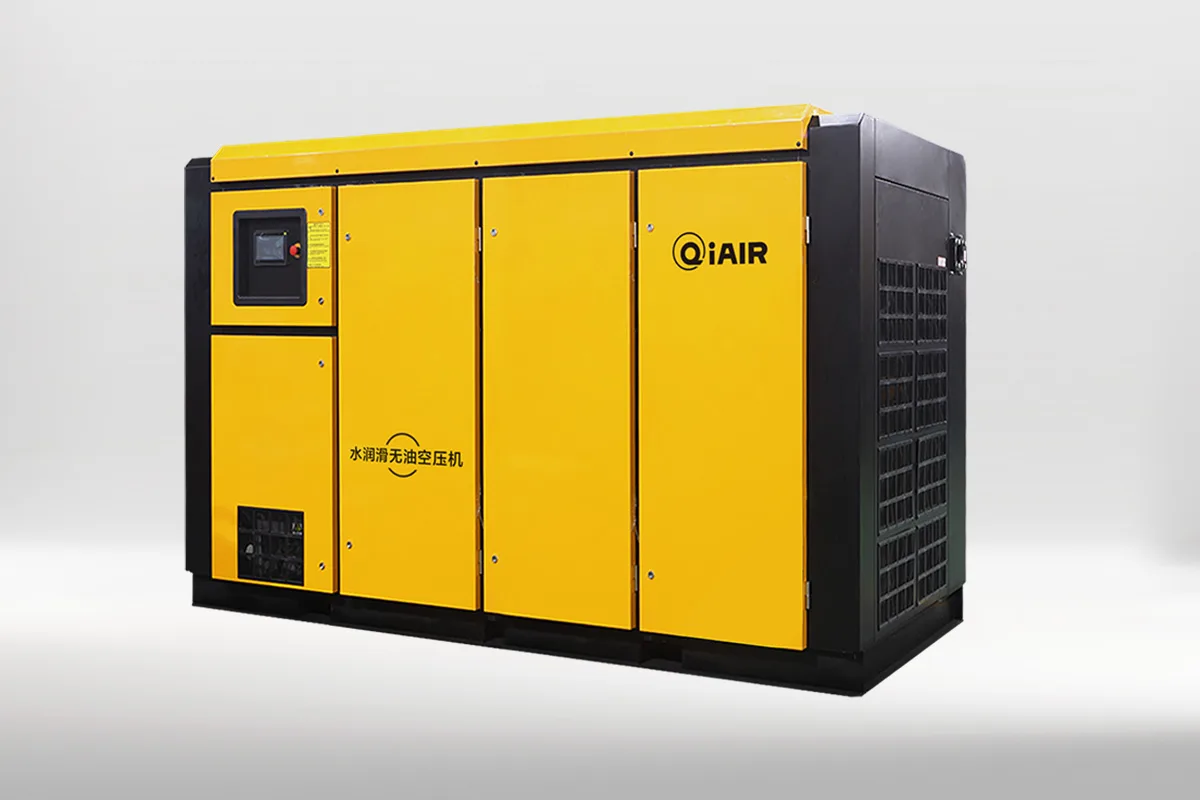
QiAir, a Chinese manufacturer and supplier of screw air compressors, supplies agricultural customers in export markets where farms range from family dairies to large grain operations, and the pattern is consistent: the farms that size for harvest week and protect the machine from dust and moisture get long, uneventful service, while farms that buy on price alone meet their compressor properly for the first time during the busiest week of the year.
Grain handling: dust is the sizing factor
Grain dust is both an intake problem and a cooler problem. A compressor breathing dusty air near a grain store clogs its intake filter in weeks rather than months, and dust on cooler fins raises discharge temperature until the machine trips on the hottest harvest afternoon — the day it is needed most. The fixes are unglamorous but effective: site the intake away from the grain handling point, duct clean air if necessary, fit a pre-filter or cyclone separator in the dustiest sites, and put cooler cleaning on the harvest-preparation checklist alongside combine servicing.
Air quality matters for the grain itself as well. Conveying and aeration air that carries oil mist or moisture can taint stored grain and encourage mould in exactly the warm, damp conditions that follow harvest. A coalescing filter and a refrigerated dryer on the grain circuit are cheap insurance against a store of grain that must be sold at a discount, and the dryer pays for itself the first time it prevents a moisture problem in a sealed silo.
Dairy farms: reliability at milking time, twice a day
A dairy's air demand is brutally time-critical: milking happens twice a day, every day, and a compressor failure at milking time is not an inconvenience but a welfare and production emergency. Dairy air systems therefore deserve redundancy thinking that a workshop does not need — at minimum a second machine or a receiver large enough to complete a milking session, and a service arrangement with a response time measured in hours, not days.
Moisture is the dairy's second problem, because washdown water and humid parlour air conspire against both the compressor and the air lines. The compressor room should be dry and ventilated rather than sharing the washdown area, drains must handle real water volumes, and air lines to the parlour need proper low-point drainage so washdown water never migrates into pneumatic controls. A dairy that treats its compressor room as part of the parlour hygiene regime, not as a shed corner, avoids the corrosion and control faults that otherwise accumulate.
- Site intakes away from grain dust; add pre-filtration in dusty stores.
- Size dairy air for a full milking session, with a redundancy plan.
- Keep the compressor room dry and separate from washdown areas.
The farm workshop and the one-machine decision
The workshop is where farm air demand spikes hardest: a 20-tonne jack, a 1-inch impact wrench, a tyre changer and a blow gun can each demand 500 to 1,000 litres per minute in bursts, and a farmer blowing down a combine at day's end wants that flow now, not after a pressure recovery wait. A receiver of 500 litres or more transforms this duty, because it stores air for bursts that the compressor could never supply instantaneously, and it lets a sensibly sized machine serve the workshop without being sized for its worst minute.
Buying one machine for all three duties is usually right, provided the buyer sizes for the coincident peak — the grain cleaner and the workshop rarely peak together, but harvest week can produce both — and protects it for the worst environment it will meet. QiAir sizes farm orders from a simple seasonal questionnaire: harvest duties, milking schedule, workshop tools, and the dustiest and wettest conditions the machine will see. A farm that answers those four questions gets a machine that survives its farm, not just its showroom.
Frequently asked questions
What size compressor does a farm need?
Size for the busiest week, not the average: grain cleaning plus workshop bursts can need 1,500 to 3,000 litres per minute, with a large receiver to cover impact-wrench and blowdown peaks.
Why does my farm compressor overheat at harvest?
Usually dust-clogged coolers and filters. Clean both before harvest, site the intake away from grain dust, and check cooler fins monthly in dusty seasons.
Does dairy air need special treatment?
Yes: dry, clean air for milking equipment, a dry compressor room away from washdown water, and a redundancy plan so a failure never interrupts milking.
Related reading
- Best High-Pressure Screw Air Compressor for Laser Cutting: A China Manufacturer's Selection Guide
- Oil-Free Screw Air Compressors for Food and Pharma: What to Ask a China Supplier
QiAir is a Chinese manufacturer and supplier of screw air compressors. If you are sourcing a screw compressor from China — for a factory, a textile mill, a construction site or a new production line — contact QiAir for a sized quotation, documented performance data and export support.