
TL;DR — Direct answer: An aerospace MRO hangar runs three air systems in one building: high-pressure air up to 10 bar or more for system testing, steady 7 bar air for riveting and pneumatic tools, and exceptionally clean, dry air for paint booths where a single defect can ground a repaint. The mistake is feeding all three from one unregulated header at one pressure, which wastes energy and risks paint quality. The working answer is a zoned system — a high-pressure circuit for testing, a general circuit for tools, and a dedicated treated supply for painting — each sized and filtered for its own job, with documentation that satisfies the hangar's quality system.
An aircraft in a maintenance hangar is surrounded by air tools doing very different work at the same time: a technician riveting a fuselage panel, another pressure-testing a hydraulic system, and a paint team preparing a booth for a livery respray. Each of those jobs fails differently when the air is wrong — rivets set weakly on sagging pressure, a test result invalidated by moisture, a paint finish ruined by oil — and the hangar's quality approvals mean those failures are documented, not shrugged off.
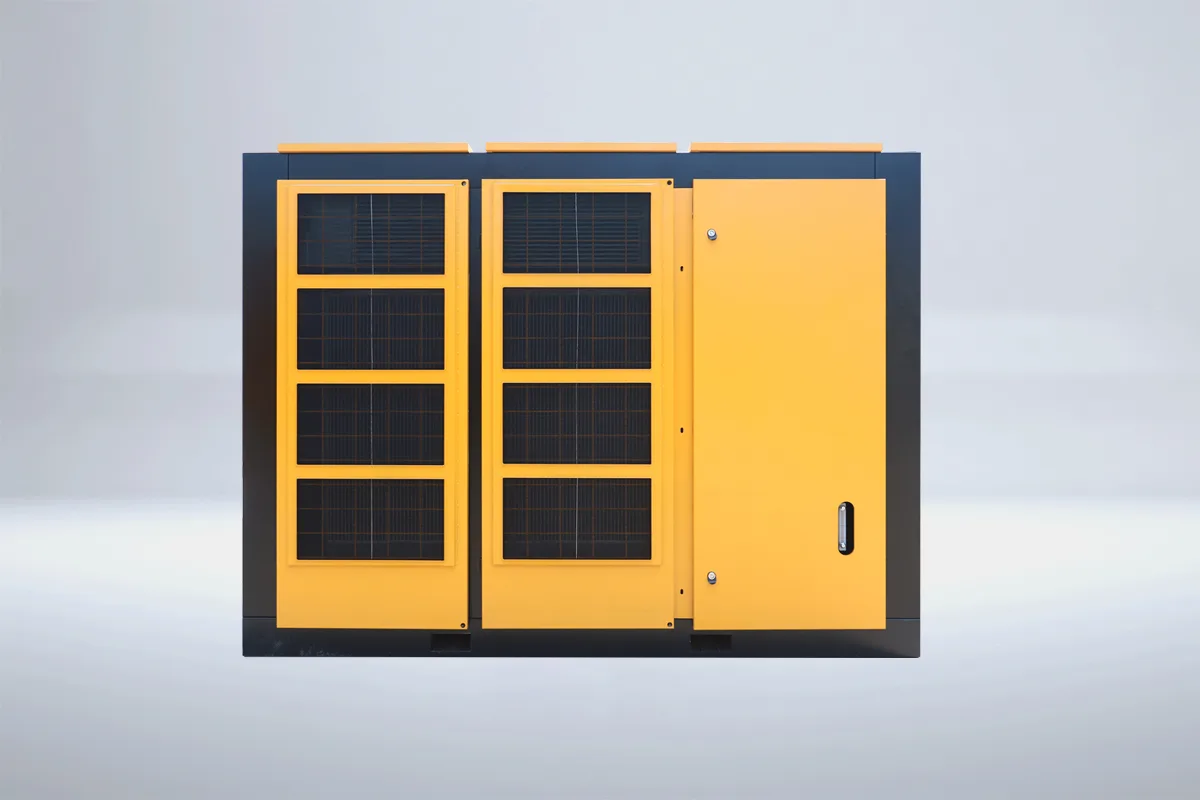
QiAir, a Chinese manufacturer and supplier of screw air compressors, sizes hangar systems by separating those three duties from the start, because a single-header design forces compromises that all three jobs pay for. The layout below keeps each duty honest.
Testing air: pressure, stability and traceability
Aircraft system tests — hydraulics, pneumatics, oxygen and fuel systems — need air at precise pressures, often higher than workshop air, and the test result is only valid if the supply pressure and quality are recorded. That argues for a dedicated high-pressure circuit with its own regulation, filtration and pressure logging, rather than tapping the general header and hoping the regulator holds during a shift change. Where test pressures exceed the general system, a booster or a separate high-pressure machine is cheaper than pressurising the whole hangar.
Cleanliness matters as much as pressure in testing: particles and moisture introduced during a test can contaminate the very system being certified airworthy. Final filtration at the test bench, point-of-use regulation, and a documented air-quality check before testing critical systems are standard practice in approved hangars. A test rig fed from an unfiltered drop leg is a finding waiting for an auditor.
Riveting and general tools: steady pressure across a big building
Hangars are large, and pressure loss across a long header is the usual cause of weak riveting and slow tool performance at the far bay. A rivet gun that needs 6.5 bar at the tool and receives 5.5 bar because of a long undersized main will set rivets that look finished and test weak — a quality escape, not just an inconvenience. The fix is a properly sized ring main, drops sized for the tool at the end of each run, and pressure checks at the farthest bay during peak demand, not at the compressor outlet.
Tool demand in a hangar is also bursty: several technicians riveting at once, then none, then a burst of grinding and drilling. A receiver of 1,000 litres or more smooths those peaks, and a VFD machine follows the hangar's rhythm across shifts better than a fixed-speed machine that idles through quiet nights. Hangars that run 24-hour maintenance schedules benefit most from that flexibility.
- Use a ring main sized for the farthest bay at peak demand.
- Check pressure at the tool, not at the compressor outlet.
- Fit a large receiver to smooth riveting and grinding peaks.
Paint booths: the cleanest air in the building
Paint is where air quality becomes visible. Oil, water or particles in booth supply air cause fisheyes, blisters and adhesion failures that force a strip and repaint — the most expensive rework in the hangar. Booth air therefore deserves its own treatment train: coalescing filtration, activated carbon for oil vapour, and drying to a dew point that holds up in the booth's temperature and humidity, with a final filter at the booth inlet changed on differential pressure.
Booth air also needs volume stability: spray guns and booth ventilation draw steadily for hours, and a pressure sag mid-coat shows as an uneven finish. Size the booth circuit for continuous spray-gun demand plus ventilation make-up, confirm it during a full spray session rather than a bench test, and keep the booth circuit isolated from hangar tool peaks so a riveting burst never starves a paint job. QiAir recommends hangar customers commission the booth circuit with a test spray panel, because a panel that passes proves the whole chain at once.
Frequently asked questions
Why separate circuits in an MRO hangar?
Testing, tools and painting need different pressures and air quality. One header forces compromises that waste energy and risk paint and test quality.
What pressure do aircraft tests need?
It varies by system, often above general workshop pressure. Use a dedicated regulated high-pressure circuit with pressure logging for test validity.
How clean must paint booth air be?
Extremely: oil-free or carbon-filtered, dry, and particle-filtered at the booth inlet, because any contamination shows as a paint defect requiring rework.
Related reading
- Screw Compressor Heat Recovery: Turning Waste Heat into Factory Savings
- IoT Monitoring for Screw Compressor Rooms: A China Supplier's Practical Setup
QiAir is a Chinese manufacturer and supplier of screw air compressors. If you are sourcing a screw compressor from China — for a factory, a textile mill, a construction site or a new production line — contact QiAir for a sized quotation, documented performance data and export support.