
TL;DR — Direct answer: Low pressure usually means demand has outgrown supply, air is being lost, or the compressor cannot deliver its rated flow. The fix starts with measurement: compare actual demand with rated output, check pressure at several points in the system, and work through leaks, filters, the inlet valve, and control settings in order. Guessing at a bigger compressor before finding the real cause wastes money and often leaves the fault in place.
When plant pressure falls, tools slow down, spray patterns change, and production lines fault, yet the compressor itself may be running normally. Low pressure is a system symptom, not a machine diagnosis, and it has at least six common causes that look identical at the pressure gauge. The fastest route to a fix is to measure first and replace parts second.
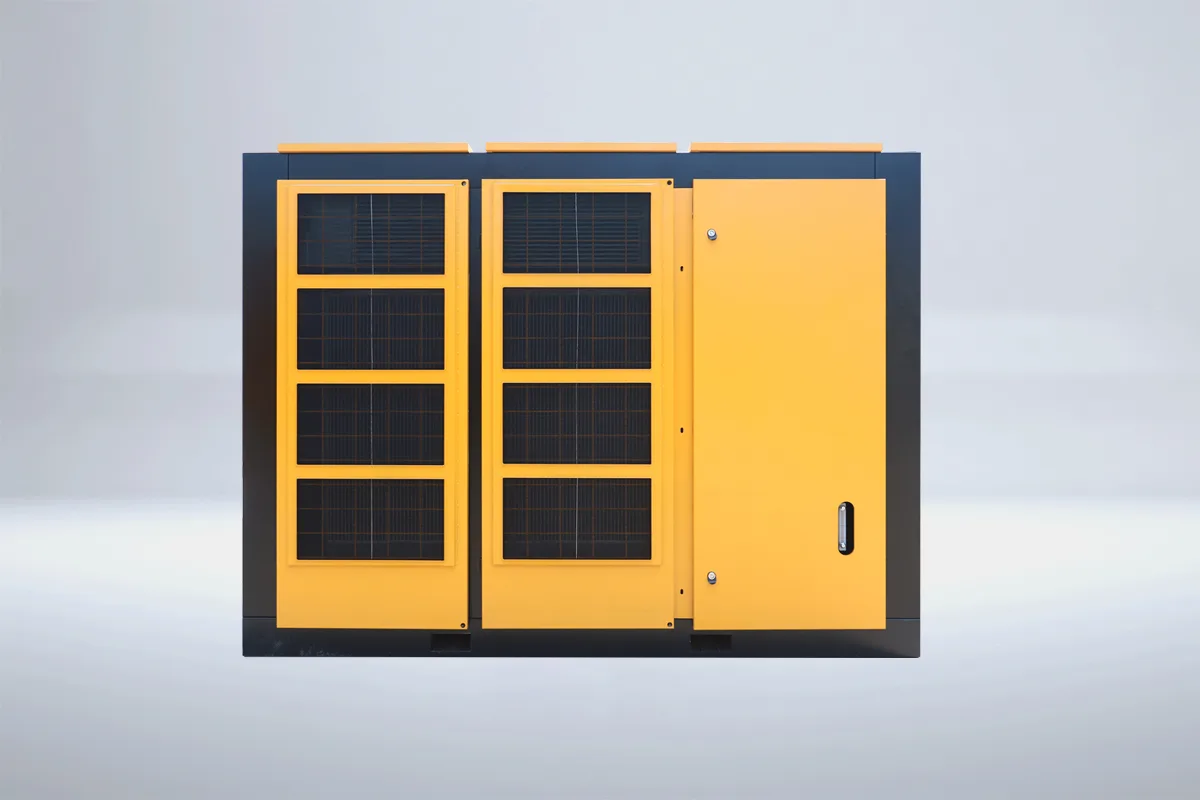
QiAir, a Chinese manufacturer and supplier of screw air compressors, supports export customers through this exact problem, and the diagnostic order below separates demand problems from machine problems before any money is spent.
Measure first: demand, pressure profile, and duty cycle
Start by recording pressure at three points: the compressor outlet, the receiver, and the farthest point of use, during a normal production shift. If outlet pressure is normal but point-of-use pressure is low, the loss is in piping, filters, or dryers between those points. If outlet pressure itself falls under load, the compressor cannot meet demand, or its own delivery is restricted.
Next, compare demand with capacity. Add up the rated consumption of equipment running at peak, allow for leaks, and compare the total with the compressor's free air delivery at the working pressure. Many low-pressure problems are simply growth: new machines added to a system sized years ago for a smaller plant. Check the duty cycle too: a machine running loaded 100 percent of the time with no reserve has no margin for peak demand.
- Log pressure at outlet, receiver, and point of use during peak production.
- Total peak demand, including leaks, and compare it with rated delivery.
- A machine loaded 100 percent of the time has no reserve for demand peaks.
Find the losses: leaks, filters, and dryers
Leaks are the most common hidden demand, and a plant can lose 20 to 30 percent of its air through joints, hoses, couplings, and faulty drains without anyone noticing. Walk the system during a quiet period with the compressor running and listen for leaks, or use an ultrasonic detector where available, and fix the largest leaks first: a single 3 mm hole at 7 bar wastes a surprising volume of air around the clock.
Then check pressure drop across filters and dryers. A clogged intake filter starves the air end, a saturated coalescing filter raises differential pressure, and an undersized or faulty dryer can restrict flow. Measure pressure before and after each treatment stage: a drop above 0.3 bar across any single stage deserves attention, and a filter element past its service life should be replaced before deeper machine diagnosis.
Check the machine: inlet valve, controls, and sizing
If the system checks out, look at the compressor itself. A sticking or partially closed inlet valve limits intake and therefore delivery, and it often shows as low output with normal running sounds. Control settings matter too: a pressure band set too low, a faulty pressure switch or transducer, or a load and unload sequence that short-cycles will all present as low or unstable pressure.
When demand genuinely exceeds capacity, the honest fix is more air: a larger machine, an additional unit, or a VFD compressor that tracks variable demand efficiently. QiAir sizes replacement and additional units from measured demand data rather than from the old machine's nameplate, because plants change, and the right new capacity is the capacity the plant actually needs today.
Frequently asked questions
How do I know if my compressor is undersized?
If it runs loaded continuously, outlet pressure still falls at peak demand, and leaks and filters have been ruled out, demand exceeds capacity. A measured demand audit confirms it before you buy.
How much air do leaks typically waste?
Often 20 to 30 percent of total output in older plants. Finding and fixing leaks is usually the cheapest capacity increase available.
Can a clogged filter cause low pressure?
Yes. A clogged intake filter reduces air-end intake, and clogged downstream filters raise pressure drop, so point-of-use pressure falls even when the compressor runs normally.
Related reading
- Screw Compressor Heat Recovery: Turning Waste Heat into Factory Savings
- IoT Monitoring for Screw Compressor Rooms: A China Supplier's Practical Setup
QiAir is a Chinese manufacturer and supplier of screw air compressors. If you are sourcing a screw compressor from China — for a factory, a textile mill, a construction site or a new production line — contact QiAir for a sized quotation, documented performance data and export support.