
TL;DR — Direct answer: A seafood plant is wet, cold and fast: washdown hoses run several times a day, chilling and individual quick freezing lines hold product at sub-zero temperatures, and packing lines fill and seal at full speed, all drawing on one air header. Wet or oily air in that environment condenses in freezing lines, contaminates product-contact surfaces and stalls a packer in the middle of a catch that cannot wait. The working system starts oil-free at the source, dries air to suit the coldest freezing line, filters in stages to the point of use, and sizes on the packing peak, because a seafood line stopped by an air failure loses product that cannot be held.
Seafood processing runs against the clock from the moment the catch arrives: receiving and washing, filleting and grading, chilling, freezing and packing all happen in a building that is hosed down constantly and held cold. Compressed air drives filleting and grading equipment, chilling and freezing controls, glazing and packing lines, and the pneumatic tools and cleaning equipment that keep the plant moving. A single wet-air event in an IQF line freezes condensate in the pipework, and a packer stopped mid-shift holds up product that is already chilled and waiting.
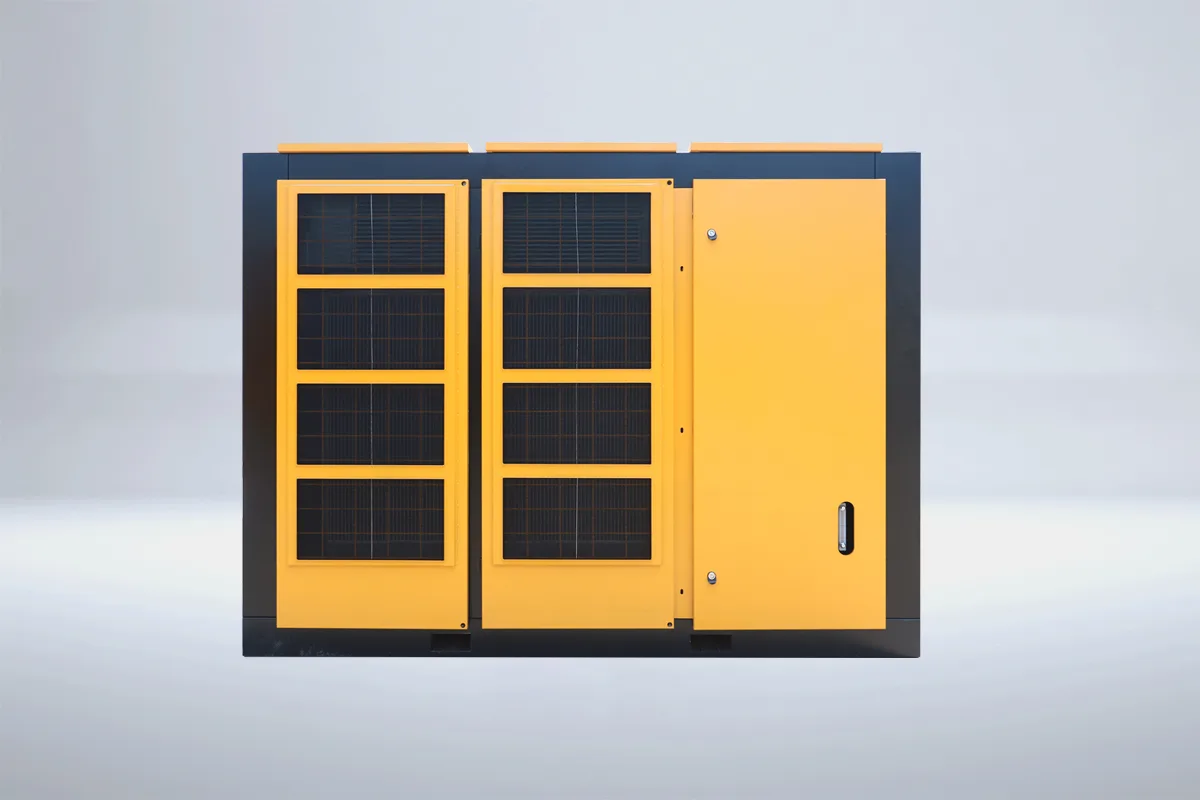
QiAir, a Chinese manufacturer and supplier of screw air compressors, sizes seafood-plant air from the coincident chilling, freezing and packing peak, because those three stages cannot pause for an air fault without losing product. The sections below follow the catch from receiving to pack-out.
Washdown, chilling and the wet-plant problem
Washdown is the seafood plant's permanent condition. High-pressure hosing several times a day floods floors and equipment, drives water into pipework low points and corrodes fittings, so the air system needs proper drainage at every low point, stainless or coated pipework where washdown reaches it, and a compressor room kept dry and ventilated rather than sited beside a washdown bay. Chilling adds the second test: air lines running into chilled rooms and cold stores condense moisture unless the pressure dew point suits the coldest line, typically minus 20 to minus 40 degrees Celsius, verified at the farthest packing station.
Oil-free compression is the defensible starting point for seafood air that can reach product contact. No downstream filter removes oil vapour completely, and a food-safety auditor who finds an oil-injected machine upstream of a packing line has a legitimate finding regardless of how good the coalescing filters look. The treatment chain then handles particles and moisture: staged particulate filtration, a dryer sized for the coldest line, and final filtration at the packing station, with filter changes tied to pressure drop and a dew point log the plant can show at audit.
IQF freezing, glazing and the packing peak
IQF freezing is the most demanding air in a seafood plant. Freezing tunnels and fluidised-bed freezers run at sub-zero temperatures for hours, and any moisture in air serving those lines freezes in the pipework, blocks flow and disturbs tunnel controls. Air for IQF service needs an exceptionally low dew point, desiccant drying where the line demands it, and continuous dew point monitoring at the freezing header with alarms, because a moisture excursion found after a production shift has already affected product.
Glazing and packing add the peak. Glazing equipment, tray sealers, baggers, labellers and case packers run together at full speed when a catch is being processed, and a pressure sag during a sealing cycle produces seal faults and rejected packs. A receiver sized for the packing peak and a VFD machine that follows the plant rhythm across receiving, freezing and packing shifts hold header pressure at 7 to 8 bar where it matters, and duty-standby capacity protects the freezing and packing stages that cannot stop for a repair.
- Start oil-free for any air that can reach product contact.
- Dry air to suit the coldest freezing line, monitored at the freezing header.
- Drain every low point and protect pipework from washdown water.
Filleting, grading and glazing: steady loads before the freeze
Filleting and grading are the plant's steady pneumatic loads. Filleting machines, grading belts, portioning equipment and handling systems cycle actuators through the shift, and each station needs stable pressure to hold its cutting and grading accuracy. A pressure dip that slows a grading actuator mis-sorts product into the wrong grade, and the error only appears at packing, when the batch is already boxed. Header pressure confirmed at the farthest grading line, not only at the compressor room, proves the system where grading is decided.
Glazing adds a cold, wet load of its own: glazing tunnels and dipping equipment spray or dip product in chilled water to form a protective ice layer, and the pneumatic controls serving those tunnels must work reliably in cold, wet conditions. Moisture in the air lines serving a glazing tunnel freezes in fittings and disturbs controls, so the dew point must suit the coldest glazing line and low points must drain. Stainless or coated fittings where washdown and glazing water reach the pipework keep corrosion from becoming a maintenance fault mid-shift.
Buying from China: the seafood sizing sheet
Before ordering from China, a seafood buyer should document the coincident chilling, freezing and packing demand, the product-contact air users, the coldest line temperature, the required pressure at the farthest packer, and voltage and frequency. QiAir sizes export seafood orders from that sheet, and confirms the oil-free and redundancy arrangement against the plant's food-safety plan rather than quoting a single machine. Get the freezing peak and the product-contact users in writing, and the system that arrives protects product instead of merely supplying air.
Frequently asked questions
Why must seafood air be oil-free at the source?
Because no filter removes oil vapour completely, and oil reaching product-contact surfaces is a food-safety and audit failure. Starting oil-free removes that source by design.
What dew point does IQF air need?
One suited to the coldest freezing line, typically minus 20 to minus 40 degrees Celsius or lower for IQF service, with desiccant drying and monitoring where the line demands it.
How should seafood air be sized?
On the coincident chilling, freezing and packing peak, with a receiver for packing cycles and duty-standby capacity for stages that cannot stop.
Related reading
- Screw Compressor Heat Recovery: Turning Waste Heat into Factory Savings
- IoT Monitoring for Screw Compressor Rooms: A China Supplier's Practical Setup
QiAir is a Chinese manufacturer and supplier of screw air compressors. If you are sourcing a screw compressor from China — for a factory, a textile mill, a construction site or a new production line — contact QiAir for a sized quotation, documented performance data and export support.