
TL;DR — Direct answer: Hospital air touches patients directly, through ventilators, anaesthesia machines and surgical tools, so oil in the line is not a quality defect but a patient-safety failure. An oil-free screw compressor removes that risk at source, and the rest of the system — filtration, drying, monitoring and backup — must be designed so that no single failure leaves a ward without air. The practical standard is ISO 8573-1 Class 0 for oil, with a defined dew point, continuous monitoring, and a standby machine that starts automatically.
A hospital maintenance manager does not judge compressed air the way a factory manager does. In a factory, dirty air ruins a product; in a hospital, it reaches a patient on a ventilator. That is why medical air systems are built in layers: an oil-free compressor so oil never enters the system, treatment stages that remove water and particles, and alarms that warn staff before air quality drifts, not after a device faults.
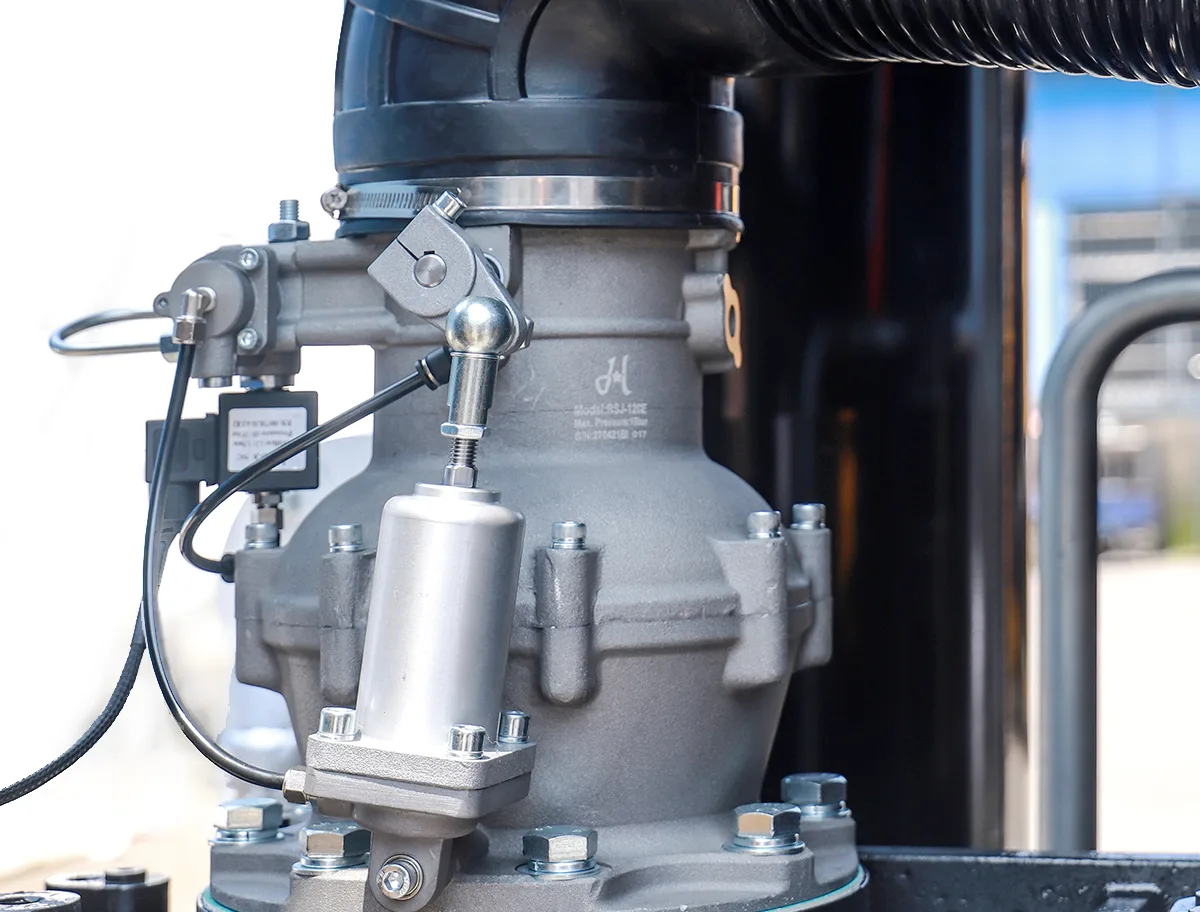
QiAir, a Chinese manufacturer and supplier of screw air compressors, supplies oil-free machines to hospitals and clinics in export markets, where the buying question is rarely the compressor alone. It is the whole medical air package: capacity for peak ward demand, a backup machine, and documentation that a hospital engineer or auditor can check. This article explains each layer in practical terms.
Why oil-free at source beats filtering oil out
An oil-injected compressor plus a filter can produce clean-looking air, but the filter is then the only barrier between oil and a patient, and filters fail silently. An oil-free screw compressor has no oil in the compression chamber at all, so there is no oil mist to filter and no separator to saturate. That single design choice changes the risk profile of the whole system and simplifies the audit story: the air is oil-free because the machine cannot add oil, not because a consumable caught it.
Oil-free does not mean maintenance-free. Rotor coatings, seals and inlet filtration carry the reliability burden, and intake air quality matters more than on an oil-injected machine, because dust that oil would have trapped can score dry rotors. Hospital plant rooms therefore need clean, ventilated intake air, a disciplined filter regime, and genuine spare seals held on site. A hospital that budgets for those items gets the long, uneventful service oil-free machines are known for.
Class 0, dew point and the treatment chain
ISO 8573-1 Class 0 means the oil content is below the detection level the standard sets, and it is the target hospitals should specify in writing rather than accepting a vague oil-free claim. Beyond oil, medical air needs a controlled dew point — typically a pressure dew point of -20 degrees Celsius or lower at the point of use in many hospital specifications — so that moisture cannot condense in ward pipework, breed bacteria, or damage ventilator valves. A desiccant dryer is the usual route to that dryness, with a refrigerated dryer alone rarely sufficient for medical lines.
Filtration still matters after an oil-free compressor, because pipework sheds particles and ambient air carries dust. A staged chain — particulate filtration, then fine filtration down to 0.01 micron, with activated carbon only where odour or vapour control is specified — protects instruments without adding unnecessary pressure drop. Sample air quality at commissioning and at least annually thereafter, and keep the results with the plant record, because an auditor will ask for test evidence, not for a brochure claim.
- Specify ISO 8573-1 Class 0 for oil in the purchase order, in writing.
- Target a medical dew point, typically -20 degrees Celsius or lower.
- Test air quality at commissioning and annually, and file the results.
Backup design: no single point of failure
Medical air standards in most countries require redundancy, and the usual hospital arrangement is duty plus standby: two machines, each able to carry the full peak load, with automatic changeover if the duty machine faults. Some larger hospitals add a third machine or a large receiver so that a changeover never interrupts supply. The receiver also matters on its own: sized at several minutes of peak demand, it covers the seconds between a fault and a standby start, and smooths the pulses of ward demand through the day.
Backup only works if it is tested. A standby machine that has not run in six months may not start when needed, so hospitals should rotate duty and standby monthly, run the standby under load, and test alarms quarterly. QiAir advises export hospital customers to write that rotation into the maintenance contract, with response times and parts cover stated in hours, because a backup design on paper is worth nothing if the second machine is an untested ornament in the plant room.
Frequently asked questions
What does Class 0 air mean for a hospital?
Under ISO 8573-1, Class 0 means oil content below the standard's detection threshold. For hospitals it is the defensible target because patient-connected devices must never receive oil-contaminated air.
Does an oil-free compressor need filters and dryers?
Yes. Filtration removes pipework particles and dust, and drying controls dew point so moisture cannot condense in ward lines. Oil-free removes the oil risk; treatment handles water and particles.
How much backup does a hospital air system need?
Typically a duty plus standby arrangement, each machine able to carry full peak load, with automatic changeover and a receiver covering several minutes of demand, tested by monthly duty rotation.
Related reading
- How to Choose the Best Screw Air Compressor Manufacturer in China for Your Factory
- Two-Stage PM VFD Screw Compressors: How a Top China Supplier Cuts Factory Energy Costs
QiAir is a Chinese manufacturer and supplier of screw air compressors. If you are sourcing a screw compressor from China — for a factory, a textile mill, a construction site or a new production line — contact QiAir for a sized quotation, documented performance data and export support.