
TL;DR — Direct answer: A mineral processing plant typically runs 7 to 8 bar, 8 to 20 m3/min, on 75 to 160 kW rotary screw compressors, with a 3°C pressure dew point dryer and heavy-duty filtration protecting flotation valves, filter presses and pneumatic controls from dust and moisture. QiAir, a Chinese screw compressor manufacturer and supplier, sizes dust-proof systems so air never stops while the mill runs.
Mineral processing is one of the harshest homes a compressor can have. Crushers shake the ground, conveyors throw up clouds of ore dust, and the plant runs twenty-four hours a day in heat, humidity or freezing cold. Compressed air drives the flotation cells, the filter presses and the instrumentation that keeps the whole circuit in balance.
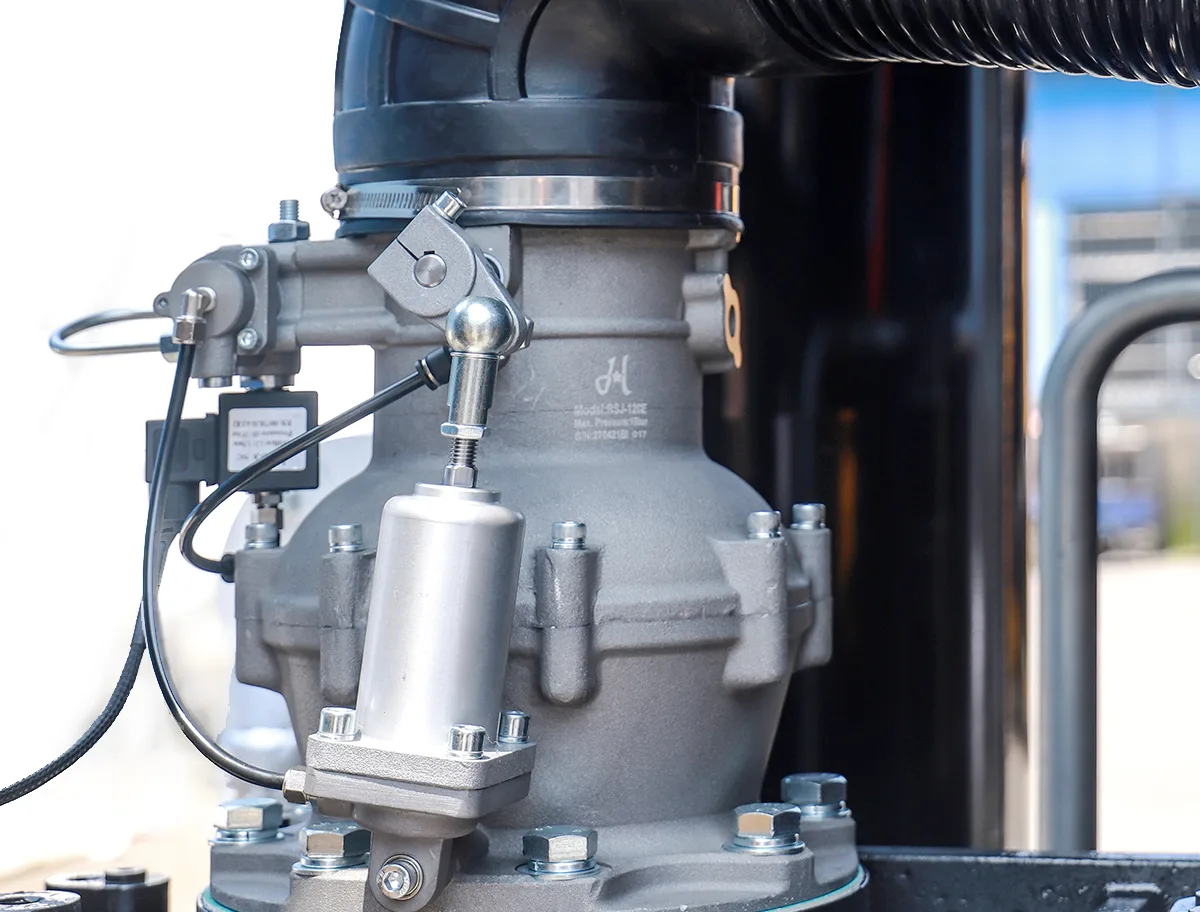
Dust is the defining problem. Ore dust is abrasive enough to score an airend and fine enough to pass a cheap intake filter, so a compressor specified for a clean factory will lose output within months here. Intake protection and cooling deserve as much design effort as the flow calculation itself.
Crushing, Conveying and Pneumatic Controls
Crushing circuits use air for dust suppression, gate actuation and crusher lubrication systems, and the demand is steady rather than spiky. Conveyor transfer points need air-operated gates and belt cleaners, while the crusher itself uses air for its hydraulic-pneumatic controls. A pressure sag slows the gates and lets ore spill at the transfer points, which then buries the return belt.
Pneumatic controls in a concentrator must work through dust that would choke an ordinary valve. Cylinders need protective boots, valve manifolds need enclosures, and the air feeding them must be dry so dust never cakes inside a spool. Fit 5 micron pre-filtration on the plant header and drain the receiver and filter bowls every shift without exception.
Vibration is a hidden enemy in a crushing plant. The compressor package sits on a slab that shakes all day, and rigid pipework transmits that vibration into the airend and the cooler joints until they leak. Use flexible connections at the compressor discharge, mount the package on vibration isolators, and check the pipe joints monthly for loosening.
- Protect cylinders and valves from ore dust
- Drain receivers and filter bowls every shift
- Use flexible discharge connections and vibration isolators
Flotation Cells, Reagent Dosing and Instrumentation
Flotation cells are the heart of a concentrator, and their air system is really two systems in one. Low-pressure blowers supply the flotation air itself, while the control valves, level sensors and reagent dosing pumps run on 7 bar instrument air from the screw compressor. A failure in the instrument air stops the dosing and the cell levels drift within minutes.
Reagent dosing needs air that is dry and precisely regulated. Lime, collector and frother are dosed through pneumatic pumps and valves, and a slow valve changes the reagent ratio enough to lose recovery for a whole shift before the laboratory results come back. Regulate the dosing branch to a steady 6 bar and keep its filtration separate from the general plant air.
Instrumentation across the plant depends on the same header. Density gauges, flow meters and pressure transmitters all use instrument air, and a single wet-air event can freeze several readings at once, leaving the control room blind. Give instrument air its own desiccant dryer reaching a minus 20°C pressure dew point, and monitor that dew point continuously.
- Regulate reagent dosing air to a steady 6 bar
- Dry instrument air with a desiccant dryer to minus 20°C
- Monitor instrument-air dew point continuously
Filter Presses, Dewatering and Tailings Handling
Filter presses are the plant's biggest pulsed air consumer. Each press cycle uses air to open and close the plates, blow the filter cloths clean and discharge the cake, and a large press can demand several cubic metres in a single cycle.
Dewatering centrifuges and thickeners use air for their controls and for cake discharge, and the environment is wet as well as dusty. Moisture in the air lines combines with ore dust to form a paste inside valves, so the dewatering branch needs a refrigerated dryer and a coalescing filter, with automatic drains that actually work in a dusty hall.
Tailings handling runs on air-operated valves and gates that must work in the worst corner of the site. The air lines to the tailings area are long, so pressure drop is a real risk, and a 1 bar loss over a long run leaves the furthest valve too weak to close. Size the pipework for the tailings distance, not the mill distance, and measure pressure at the furthest valve.
- Fit a 5,000 litre receiver near the filter-press hall
- Dry dewatering air and fit working automatic drains
- Size pipework for the furthest tailings valve
Buying from China: Sizing Sheet for Mineral Processing Plants
Before requesting a quotation, gather four numbers: the flotation instrument-air and dosing demand, the filter-press cycle count and air per cycle, the crushing and conveying control load, and the distance from the compressor room to the tailings area and the press hall. A supplier that quotes from the mill tonnage alone will miss the pulsed loads that actually size the system.
For most mineral processing plants the practical range is a 75 to 132 kW variable-speed drive screw compressor at 7.5 or 8 bar, with a refrigerated dryer, a desiccant dryer for instrument air, heavy-duty filtration and a 5,000 litre receiver. Larger plants usually run a duty-plus-standby pair, so maintenance never stops the mill.
When comparing Chinese suppliers, ask for the full package price including both dryers, filters, receiver and commissioning spares, and confirm the export packing, voltage and documentation for your country. Check the airend service interval, the availability of filters and separator elements through the supplier's export channel, and the dust rating of the intake system. QiAir, a Chinese screw compressor manufacturer and supplier, quotes the complete package so buyers compare real installed cost.
- Collect flotation, press and crushing loads before quoting
- Budget 75 to 132 kW VSD plus two-stage drying
- Confirm dust protection, spares and export packing in writing
Frequently asked questions
What pressure does a mineral processing plant normally run?
Most run 7 to 8 bar at the header, with instrument air regulated to 6 bar and flotation control valves at 6 to 7 bar, so dosing and cell levels stay stable.
Why does instrument air need a desiccant dryer?
A refrigerated dryer leaves enough moisture to freeze transmitters and cake dust inside valves. Desiccant drying to minus 20°C keeps instrument air reliable in a dusty concentrator.
How much air does a filter press use?
A large press can demand several cubic metres in a single cycle, and several presses cycling together create a surge that needs a 5,000 litre receiver near the press hall.
How does ore dust damage a compressor?
Abrasive dust drawn into the intake scores the airend and blocks the oil cooler. A heavy-duty intake filter, clean-air ducting and weekly cooler cleaning are essential.
Related reading
- Screw Compressor Heat Recovery: Turning Waste Heat into Factory Savings
- IoT Monitoring for Screw Compressor Rooms: A China Supplier's Practical Setup
QiAir is a Chinese manufacturer and supplier of screw air compressors. If you are sourcing a screw compressor from China — for a factory, a food plant, a construction site or a new production line — contact QiAir for a sized quotation, documented performance data and export support.