
TL;DR — Direct answer: Every extra bar of pressure costs roughly 6 to 8 percent more energy for the same air, and buys nothing if the tools only need 7 bar. The right working pressure is therefore the lowest pressure at which the hungriest tool still performs at the farthest point of use, plus the measured losses in piping and treatment — usually 0.5 to 1 bar. Plants that run at 10 bar because 'more pressure is safer' pay that premium on every cubic metre for years, while plants that run at 7 bar with undersized piping starve their tools. Measure the losses, then set the pressure.
Ask ten plant managers what pressure their system runs at and most will answer with the compressor's setpoint, not with the pressure at the tool. That gap is the whole problem: a compressor set at 10 bar feeding a plant that loses 1.5 bar in piping and dryers delivers 8.5 bar at the tool, while a compressor set at 8 bar on a tight, well-sized system delivers nearly the same tool pressure for far less energy. Setpoint is not performance.
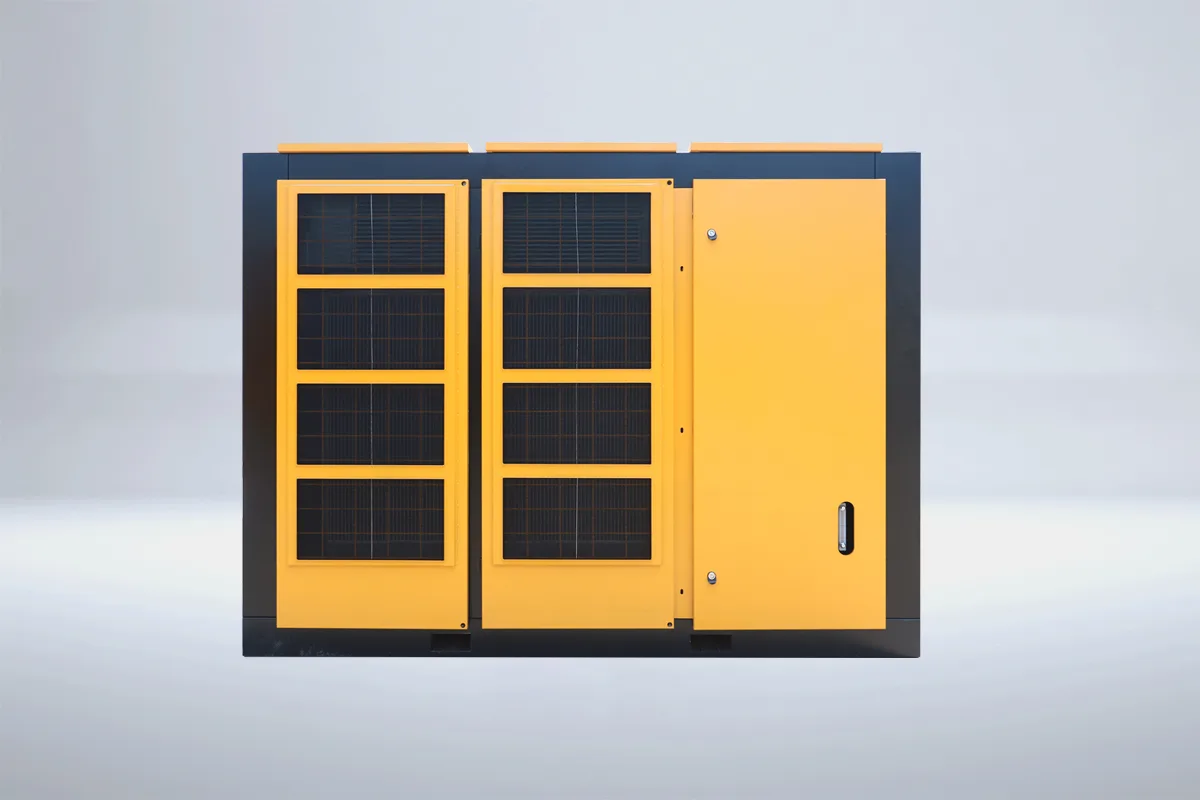
QiAir, a Chinese manufacturer and supplier of screw air compressors, sizes export orders from tool requirements backwards: tool pressure first, losses second, setpoint last. The method below works for a single workshop compressor and for a multi-machine plant, and it usually finds energy that no new machine purchase can match.
Start from the hungriest tool, not the compressor catalogue
List the tools and processes by required pressure at the tool, not by catalogue pressure. Most general air tools, pneumatic cylinders and packaging equipment are designed for 6 to 7 bar at the tool; spray equipment and some actuators want 7 to 8 bar; and only specialist processes — PET blowing, high-pressure testing, some laser assist gases — genuinely need 10 bar and above. The plant's working pressure should serve the highest requirement among tools that run simultaneously, not the highest requirement among tools that exist in the building.
That distinction matters because one outlier tool routinely drags a whole plant up a pressure band. A testing rig that needs 10 bar for one hour a week should not set the pressure for forty hours of 7 bar production; a small booster or a separate circuit for that rig is cheaper within months. When a buyer tells us their plant 'needs 10 bar', the first question is always which tool, for how many hours, and at what distance from the compressor.
Measure the losses before raising the setpoint
Pressure loss hides in four places: piping (undersized mains and long runs), treatment (dryers and filters, worse as elements age), fittings and quick couplers, and leaks. A plant survey with gauges at the compressor outlet, after treatment, and at the farthest point of use during peak demand usually finds 0.5 to 2 bar of loss, and the fix is often a larger main header or a filter change rather than a higher setpoint. Raising the setpoint to cover a clogged filter is the most expensive way to postpone a filter change.
The energy arithmetic makes the case plainly: lifting a system from 7 to 8 bar raises compressor energy by roughly 6 to 8 percent for the same delivered air, and from 7 to 10 bar by around 20 percent. On a 75 kW machine running 4,000 hours a year, that 20 percent is 60,000 kWh — a sum that dwarfs the cost of a pipework upgrade. Conversely, dropping a genuinely over-pressurised plant by 1 bar, after confirming tool performance, is the cheapest energy project most factories will ever do.
- Gauge outlet, post-treatment and farthest point of use at peak demand.
- Fix piping and filter losses before raising the setpoint.
- Each extra bar costs roughly 6 to 8 percent more energy for the same air.
When higher pressure is genuinely right
Higher pressure earns its keep in three cases: a specialist process that truly needs it, a long distribution run where a higher header pressure plus local regulation beats a larger pipe, and a plant with extreme peak pulses where stored energy in a receiver at higher pressure smooths demand. In the second case the economics still need checking, because larger pipe is a one-time cost while higher pressure is a perpetual one.
The decision rule QiAir gives export customers is simple: set the pressure from measured tool need plus measured loss, write both numbers into the commissioning record, and revisit them annually. Plants grow, tools change, and a setpoint chosen five years ago for a tool that no longer exists is pure waste. A pressure decision reviewed once a year, with gauges rather than habit, keeps the plant at the cheapest pressure that still does the work.
Frequently asked questions
Is running at higher pressure bad for the compressor?
It raises discharge temperature, energy use and wear, and shortens service intervals if the machine runs continuously above its efficient band. Running at the lowest pressure that does the work is kinder to the machine.
How do I find my plant's real pressure loss?
Gauge the compressor outlet, the point after treatment, and the farthest point of use simultaneously during peak demand. The differences are your piping, treatment and fitting losses.
Should I buy a 13 bar machine just in case?
Only if a real process needs 13 bar. A 13 bar machine run at 7 bar is oversized for its duty; buy for the pressure you measured, with a booster for any genuine outlier.
Related reading
- Screw Compressor Heat Recovery: Turning Waste Heat into Factory Savings
- IoT Monitoring for Screw Compressor Rooms: A China Supplier's Practical Setup
QiAir is a Chinese manufacturer and supplier of screw air compressors. If you are sourcing a screw compressor from China — for a factory, a textile mill, a construction site or a new production line — contact QiAir for a sized quotation, documented performance data and export support.