
TL;DR — Direct answer: A ceramic tile manufacturing plant typically runs 7 to 8 bar, 10 to 20 m3/min, on 90 to 160 kW rotary screw compressors, with a 3°C pressure dew point dryer and 0.01 micron filtration protecting pressing, glazing and sorting lines from moisture and oil. QiAir, a Chinese screw compressor manufacturer and supplier, sizes systems with steady air so tiles stay flat and glaze stays even.
A ceramic tile factory turns clay powder into finished tiles on heavy continuous lines where powder is pressed, glaze is applied, tiles are fired in a kiln, and every finished tile is sorted and packed. The lines run around the clock, and compressed air touches each step, from the press that forms a tile to the sorter that grades it. A failure anywhere stops a kiln feed that cannot wait. Kilns run for weeks without stopping, so the air system behind them must be just as relentless.
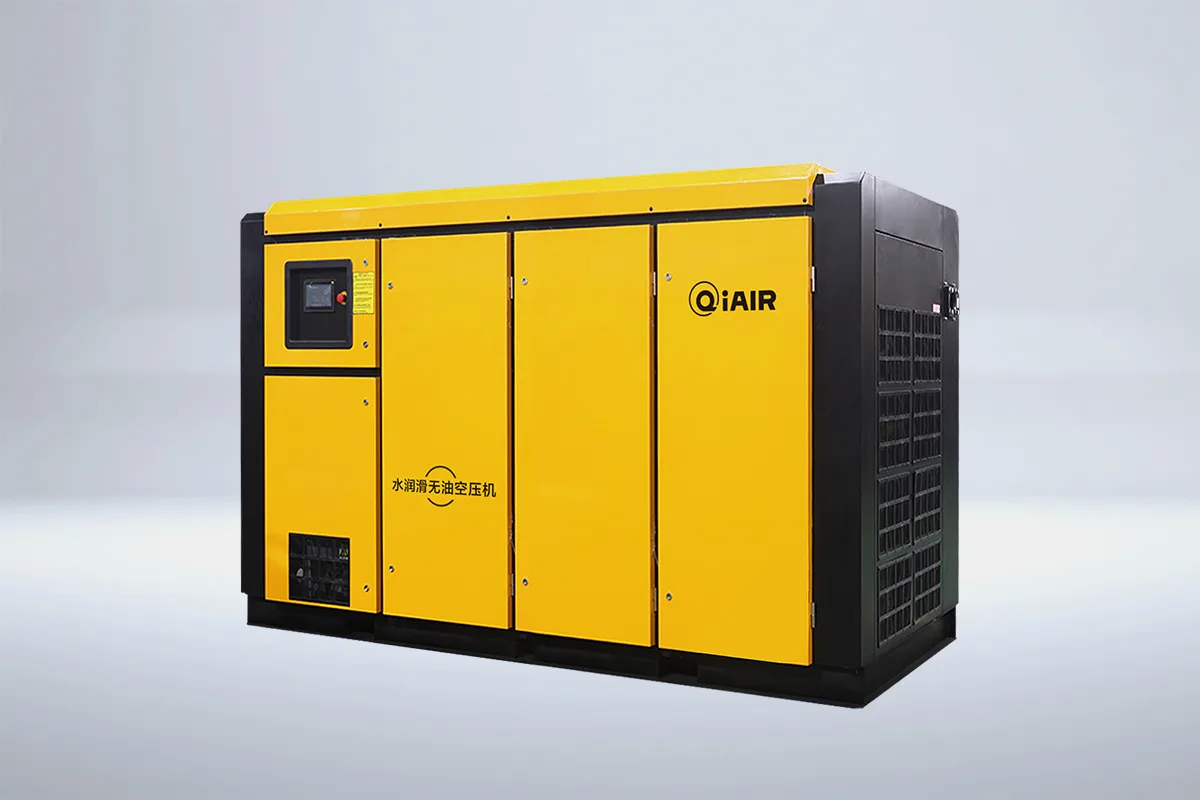
The product must lie flat on a floor and keep its glaze for decades, so a tile pressed with unsteady air or glazed with wet air becomes a second-grade batch rather than a passing lot. Air quality at the pressing, glazing and sorting stations is therefore a production issue, and buyers who audit the factory will ask about it directly.
Powder Handling, Pressing and Tile Forming
Ceramic tiles start as spray-dried clay powder, fed into hydraulic presses that use air for mould filling, ejection and handling. A mould that fills unevenly because its air supply sagged leaves a tile with a density variation that warps in the kiln. Stable 7 bar air at the press line keeps every tile true.
Pressing is the most air-sensitive job in the tile plant. Presses cycle several times per minute, and the air cylinders that eject each tile must move smoothly, because a tile that sticks in the mould chips its edge and becomes scrap. Regulate the press line to a steady 7 bar and keep its branch filtered.
Clay dust is a constant concern around the press hall. Fine powder drifts through the air and settles on every surface, and dust drawn into the compressor intake scores the airend within months. Duct the intake to clean air outside, fit a heavy-duty pre-filter, and clean the cooler weekly.
- Hold 7 bar steady at the tile press line
- Regulate the press line on a separate 7 bar branch
- Duct the intake away from clay powder dust
Glazing, Decoration and Kiln Feeding
Glazing is the most air-sensitive job in a tile plant. Glaze is sprayed or poured onto tiles, and the air used in the spray guns must be dry and oil-free, because moisture or oil in the supply leaves pinholes and craters in the fired glaze. Dry the glazing branch to a 3°C pressure dew point and filter it to 0.01 micron.
Digital decoration prints patterns onto glazed tiles with printheads that use air for cleaning and maintenance. A cleaning jet that surges can damage a printhead nozzle, and a blocked nozzle leaves a white streak across a whole batch. A damaged nozzle prints the same white line on every tile until someone notices and stops the line. Regulate the decoration line to a steady 6.5 bar and keep its air branch separate from the press hall.
Kiln feeding uses air for conveyors, pushers and handling fixtures that move tiles into a kiln running above 1,000°C. A pusher that hesitates because its air supply faltered can leave tiles jammed at the kiln mouth, and a jammed kiln feed stops the whole line. Keep the kiln feed branch regulated to a steady 7 bar.
- Dry glazing air to a 3°C dew point with 0.01 micron filtration
- Regulate digital decoration to a steady 6.5 bar
- Regulate the kiln feed branch to a steady 7 bar
Sorting, Grading and Packing
Sorting is the gate every tile must pass before shipping. Tiles are measured for size, flatness and shade, and the air used to drive the sorting rigs must be stable, because a pressure dip during a measurement looks like a tile fault. Keep the sorting branch filtered and regulated, and log the dew point daily.
Grading separates first-grade tiles from seconds, and its air tools are exacting. Pneumatic ejectors divert tiles into the right bins, and an ejector that fires late because its air supply faltered can send a first-grade tile into the seconds bin. Regulate the sorting line to a steady 7 bar and check ejector timing weekly.
Packing uses air hoists and handling equipment to move boxes of tiles that weigh twenty-five kilograms or more. A slow handling station stretches the line takt time, and a dropped box shatters a whole set. Give the packing area its own receiver and drain it every shift so water never reaches a handling valve.
- Test and sort with stable, regulated air from a dedicated branch
- Regulate sorting ejectors to a steady 7 bar
- Fit a receiver near the packing and handling area
Buying from China: Sizing Sheet for Ceramic Tile Plants
Before requesting a quotation, gather four numbers: the tile press peak flow including ejection demand, the glazing and decoration air quality specification, the sorting and packing air demand, and the distance from the compressor room to the furthest production line. A supplier that quotes from the tile output alone will miss the press peak that actually sizes the system.
For most ceramic tile plants the practical range is a 90 to 132 kW variable-speed drive screw compressor at 7.5 or 8 bar, with a refrigerated dryer, 0.01 micron filtration and a 5,000 to 8,000 litre receiver. Larger plants running two press lines usually run a duty-plus-standby pair so maintenance never stops a kiln feed.
When comparing Chinese suppliers, ask for the full package price including dryer, filters, receiver and commissioning spares, and confirm the export packing, voltage and documentation for your country. Check the filter element life, the service interval and the availability of filters and airends through the supplier's export channel. QiAir, a Chinese screw compressor manufacturer and supplier, quotes the complete package so buyers compare real installed cost.
- Collect pressing, glazing and sorting loads before quoting
- Budget 90 to 132 kW VSD plus dryer, filters and receiver
- Confirm spares, voltage and export packing in writing
Frequently asked questions
What pressure does a ceramic tile plant normally run?
Most run 7 to 8 bar at the header, with press lines at 7 bar, glazing at 7 bar, and sorting ejectors held at a steady 7 bar.
Why does glazing need such dry air?
Moisture or oil in the spray air leaves pinholes and craters in the fired glaze, and a flawed glaze means a second-grade batch. Dry air to a 3°C dew point keeps glaze even.
Should decoration air share a line with the press hall?
It can share the compressor room, but give digital decoration its own regulated branch, so press surges and clay dust can never reach a printhead.
How much air does a ceramic tile plant use?
Most plants run 10 to 20 m3/min on 90 to 160 kW compressors, with the press and ejection peaks deciding the size rather than the average line load.
Related reading
- How to Choose the Best Screw Air Compressor Manufacturer in China for Your Factory
- Two-Stage PM VFD Screw Compressors: How a Top China Supplier Cuts Factory Energy Costs
QiAir is a Chinese manufacturer and supplier of screw air compressors. If you are sourcing a screw compressor from China — for a factory, a food plant, a construction site or a new production line — contact QiAir for a sized quotation, documented performance data and export support.