
TL;DR — Direct answer: For fibre laser cutting, choose a high-pressure screw compressor that delivers clean, dry air at your cutting head’s required pressure with stable flow and enough capacity for the nozzle size you actually use. Pressure alone is not enough — moisture, oil and pressure swings all show up directly as cut quality problems.
Laser cutting is unforgiving of poor compressed air. The assist gas shapes the cut, clears molten material and protects the lens, so any weakness in the air supply appears immediately as dross, rough edges, discolouration or inconsistent cutting speed. When buyers search for a laser cutting air compressor from China, the right question is not only how much pressure a machine can reach, but whether it can hold clean, dry, stable air through a full production shift.
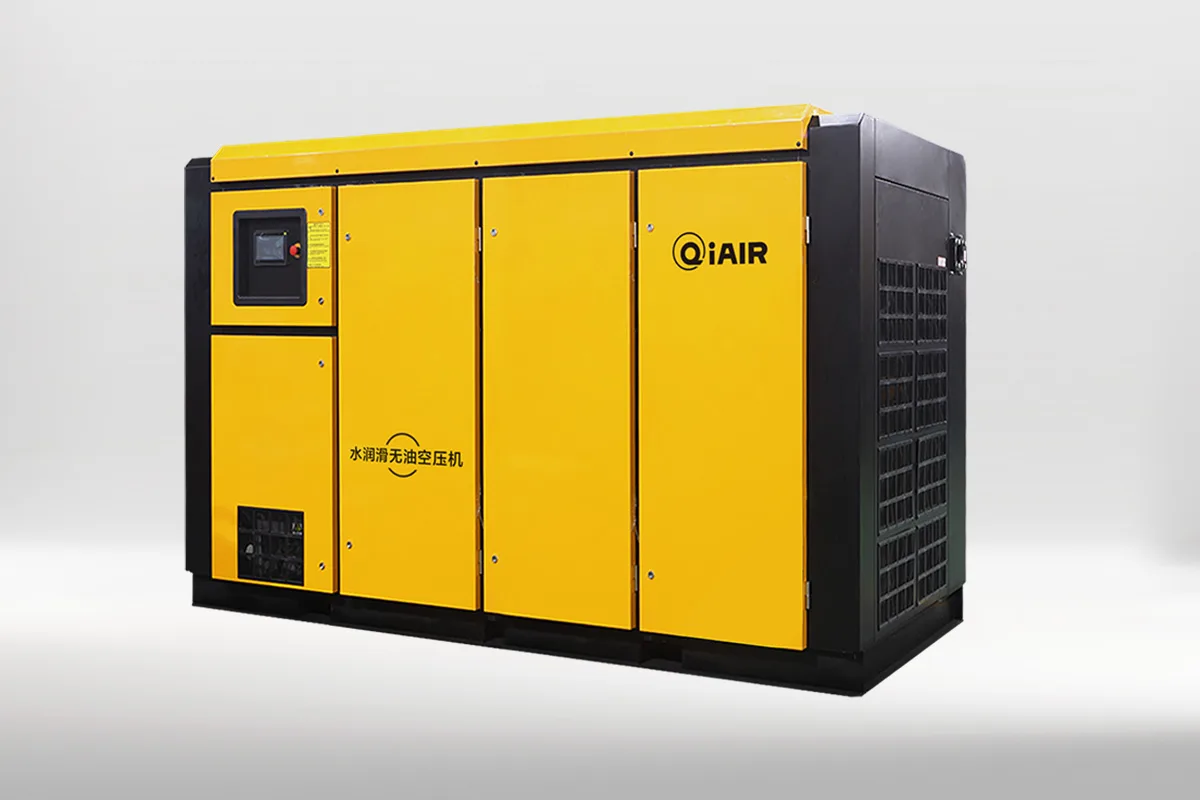
What Pressure Does Laser Cutting Really Need?
Requirements vary with material, thickness and cutting head. Thin sheet may cut well at moderate pressure, while thick plate and nitrogen-free air cutting often call for higher pressure to keep the kerf clear. Start from your laser manufacturer’s cutting tables and your most demanding regular job, not from the highest number in a catalogue. Overshooting pressure across the whole system wastes energy; undershooting it limits thickness and speed. Where a single machine serves both cutting and general workshop air, consider whether a dedicated high-pressure line for the laser is more efficient than raising pressure everywhere.
Flow, Stability and Duty Cycle Matter as Much as Pressure
Flow must match nozzle consumption at your cutting pressure, with headroom for piercing and for the moments when the head moves between cuts. A machine that reaches the right pressure on paper but cannot sustain flow will cause pressure sag exactly when cut quality depends on it. Check continuous duty ratings and how the compressor behaves under the stop-start pattern of real cutting work. A variable-speed drive can help here, holding pressure steady as demand changes instead of cycling between load and unload.
Air Treatment: Dry, Clean, and Oil-Controlled
Moisture is the enemy of laser optics and cut consistency. A refrigerated dryer may be adequate for general use, but high-pressure laser work often benefits from adsorption drying to a much lower dew point, especially in humid climates or where lenses are expensive. Filtration should remove oil aerosols and particles before air reaches the cutting head, and the system should be checked regularly — a saturated dryer or a clogged filter quietly degrades every cut. Ask a top screw compressor supplier to specify the complete treatment chain for your pressure and climate, not just the compressor.
Heat, Noise and Placement in a Cutting Shop
High-pressure compression generates heat, and a cutting shop is already warm. Give the compressor cool inlet air, adequate ventilation and room for service access, and keep discharge piping routed so condensate is drained rather than carried toward the laser. Noise also deserves attention if operators work nearby; check the sound level at your working pressure and whether an enclosure or a separate compressor room is the better answer. Good placement protects both the machine and the people around it.
A Short Selection Checklist
Confirm required pressure and flow from your cutting tables; confirm dew point and filtration for your optics; confirm continuous-duty capacity at that pressure; confirm voltage, cooling and service support in your market; and confirm what is included — dryer, filters, receiver and controls — so you are comparing complete systems rather than bare machines. A China manufacturer that walks through this checklist with you is helping you buy cut quality, not just a compressor.
Frequently Asked Questions
Can a standard workshop compressor run a fibre laser cutter?
Sometimes for light work, but often not well. Laser cutting usually needs higher pressure, drier air and more stable flow than general workshop use, so a dedicated high-pressure setup is normally the safer choice.
Why does moisture in compressed air damage laser cutting?
Moisture can damage optics, cause inconsistent cuts and increase dross. Dry air protects the lens and keeps cut quality repeatable across a shift.
Should I buy a compressor with a built-in dryer for laser cutting?
An integrated dryer simplifies installation, but check its dew point at your pressure. High-pressure laser work may still need additional adsorption drying — confirm this before ordering.
Talk to QiAir, a China Screw Compressor Manufacturer and Supplier
QiAir is a Chinese manufacturer and supplier of screw air compressors, including high-pressure models configured for laser cutting workshops. Visit QiAir to discuss your application, request a quotation, and learn how a Chinese manufacturer and supplier of screw air compressors can support your factory — from selection and sizing to installation guidance and after-sales support.
Related reading: Browse more guides in the screw compressor blog.